
Pharmacy Billing Problems? How the Right Software Fixes Errors, Delays & Compliance Issues
May 8, 2026
.Blog

Running a pharmacy is no longer just about dispensing medicines. Modern pharmacies manage prescriptions, insurance claims, inventory, supplier coordination, billing accuracy, customer records, and compliance requirements all at the same time. When billing systems are outdated or disconnected from daily operations, even small mistakes can create major operational problems.
From wrong medicine billing and delayed checkouts to inventory mismatches and compliance risks, pharmacy billing problems can quickly affect customer trust and profitability. Manual processes and disconnected systems often slow staff down, increase billing errors, and make audits stressful.
This is why pharmacies are increasingly moving toward pharmacy billing software and integrated pharmacy POS systems that automate workflows, reduce mistakes, and improve operational visibility.
The right pharmacy management software does more than generate invoices. It connects billing, inventory management, stock tracking, reporting, and compliance into one streamlined workflow that helps pharmacies operate faster and more accurately.
Common Pharmacy Billing Problems Pharmacies Face Daily
Many pharmacies experience the same recurring operational issues, especially when relying on manual processes or outdated systems.
1. Billing Errors and Incorrect Invoices
Manual billing increases the chances of entering the wrong medicine, incorrect quantities, duplicate items, or inaccurate pricing. Even a small billing mistake can lead to customer complaints, refund requests, or compliance concerns.
Pharmacy billing errors often happen because staff members manually search products, calculate taxes separately, or update inventory after billing instead of during the transaction.
2. Delayed Checkout and Long Queues
Slow billing systems create frustration for both customers and pharmacy staff. During peak hours, delayed prescription processing and slow invoice generation can lead to long checkout lines and poor customer experience.
Without a fast pharmacy POS system, pharmacies struggle to maintain efficient service.
3. Inventory Mismatches
One of the biggest challenges in pharmacies is maintaining accurate stock levels. When billing software is not connected to inventory management, sold medicines may not update automatically in the stock system.
This creates issues like:
- Out-of-stock medicines appearing available
- Duplicate inventory records
- Overstocking slow-moving products
- Missing inventory visibility
- Revenue leakage due to stock inaccuracies
4. Medicine Expiry Tracking Problems
Pharmacies manage products with strict expiry timelines. Without automated tracking, expired medicines can remain on shelves or in inventory records, creating financial and compliance risks.
5. Compliance and Audit Challenges
Pharmacies must maintain proper transaction records, prescription histories, tax documentation, and medicine tracking logs. Manual systems make audits difficult because records are scattered, incomplete, or difficult to retrieve quickly.
This becomes even more problematic for pharmacies handling controlled medicines or managing multiple branches.
6. Insurance Claim Delays
Pharmacies dealing with insurance claim processing often face reimbursement delays because of incorrect prescription data, missing documentation, or invoice inconsistencies.
Disconnected billing and prescription systems increase the likelihood of rejected claims.
Why Traditional Pharmacy Billing Methods Fail
Many pharmacies still rely on spreadsheets, handwritten invoices, or outdated desktop software that was not designed for modern operational demands.
These systems often fail because they:
- Require manual data entry
- Operate separately from inventory management
- Lack real-time stock synchronization
- Do not support barcode billing
- Make reporting difficult
- Increase dependency on staff memory
- Create duplicate workflows
- Provide limited compliance visibility
As pharmacies grow, these limitations become operational bottlenecks.
The Hidden Cost of Pharmacy Billing Errors
Billing issues affect much more than daily transactions. Over time, they impact profitability, operational efficiency, and customer trust.
1. Revenue Leakage
Incorrect invoices, duplicate billing, missing transactions, and stock discrepancies can quietly reduce profits.
2. Reduced Customer Trust
Customers expect pharmacies to process prescriptions quickly and accurately. Frequent mistakes or delays reduce confidence in the business.
3. Compliance Risks
Missing records or inaccurate transaction logs can create problems during audits and inspections.
4. Increased Staff Workload
Manual reconciliation, stock corrections, and invoice adjustments consume valuable time that staff could spend assisting customers.
5. Inventory Waste
Without expiry tracking and real-time inventory updates, pharmacies risk overstocking medicines that may expire before being sold.
8. Detailed Reporting
Strong reporting tools help pharmacies monitor sales, stock movement, and operational performance.
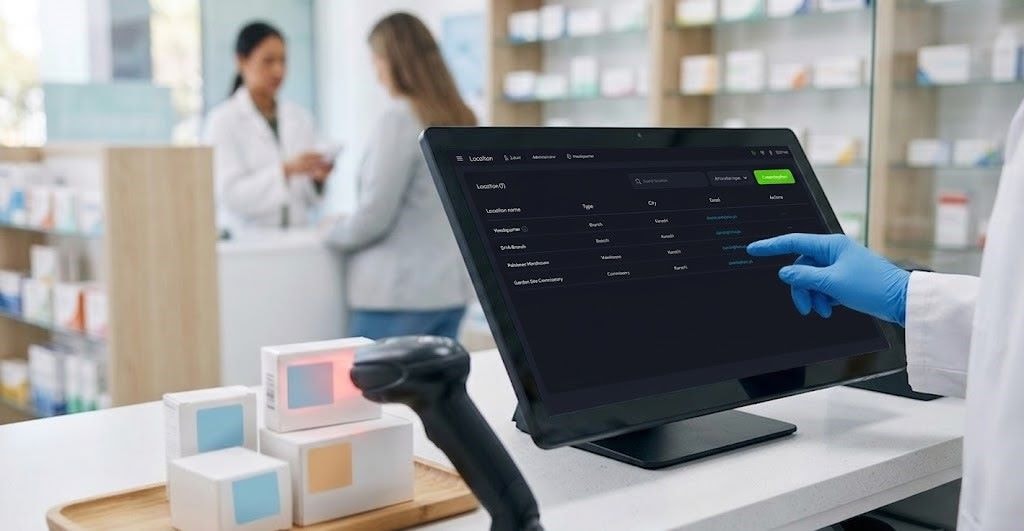
How Pharmacy POS Software Improves Customer Experience
Customers expect pharmacies to provide quick and reliable service. A modern pharmacy POS system improves customer experience by enabling:
- Faster checkout
- Accurate invoices
- Digital receipts
- Multiple payment methods
- Quick prescription processing
- Customer purchase history access
These improvements help pharmacies build stronger customer loyalty.
Cloud-Based Pharmacy Software vs Traditional Systems
Many pharmacies are moving toward cloud-based pharmacy management software because it offers greater flexibility, accessibility, and operational efficiency compared to traditional systems.
Traditional pharmacy software is often limited to a single device or local network, making it difficult for owners to access reports or monitor operations remotely. Cloud-based pharmacy software, on the other hand, allows pharmacies to manage billing, inventory, sales, and reporting from anywhere with internet access.
Cloud systems also provide automatic backups, reducing the risk of losing important business data due to hardware failures or manual errors. Traditional systems usually depend on manual backups, which can be inconsistent and time-consuming.
Another major advantage is real-time synchronization. Cloud-based pharmacy software updates inventory, sales, and operational data instantly across all connected devices and branches. Traditional systems may experience delayed updates or disconnected records, especially in multi-branch setups.
For growing pharmacies, cloud platforms make expansion much easier. Multi-branch inventory management, centralized reporting, and unified billing workflows become more manageable without requiring complex infrastructure.
Cloud software also receives faster updates and improvements automatically, while traditional systems often require manual maintenance and software upgrades.
Because of these advantages, cloud-based pharmacy systems provide pharmacies with better operational visibility, scalability, and long-term efficiency, especially for businesses planning future growth.
How Oscar Helps Pharmacies Streamline Billing and Operations
Oscar helps pharmacies simplify operations by combining billing, inventory management, POS functionality, and reporting into one connected platform.
Instead of relying on disconnected systems, pharmacies can manage:
- Billing and invoicing
- Real-time inventory tracking
- Barcode billing
- Medicine stock monitoring
- Sales reporting
- Supplier management
- Customer records
- Multi-branch operations
..from a single centralized system.
Because inventory updates automatically during billing, pharmacies reduce stock discrepancies and improve operational accuracy. Oscar also helps businesses improve checkout speed, maintain better visibility into inventory movement, and streamline daily workflows.
For pharmacies looking to modernize operations without adding complexity, an integrated system like Oscar creates a more efficient and scalable setup.
How to Choose the Right Pharmacy Billing Software
Not every pharmacy software solution offers the same capabilities. Before choosing a system, pharmacies should evaluate:
1. Ease of Use
Staff should be able to learn and operate the system quickly.
2. Inventory Integration
Billing and inventory should work together in real time.
3. Compliance Support
The software should maintain digital records and reporting capabilities.
4. Scalability
The system should support future business growth and additional branches.
5. Reporting Features
Strong analytics help pharmacies make better business decisions.
6. Customer Support
Reliable support is important for operational continuity.
Common Pharmacy Billing Problems and Their Causes
Pharmacy billing problems can affect checkout efficiency, transaction accuracy and the reliability of sales records. Many issues arise when staff rely on repetitive manual entry, disconnected records or inconsistent billing procedures.
Common pharmacy billing problems include:
Manual entry errors: Entering product prices, quantities or discounts manually can introduce mistakes that require corrections and additional checks.
Slow checkout processes: Searching for products and calculating transaction totals manually can increase the time required to serve customers, particularly during busy periods.
Inconsistent transaction records: Maintaining sales information across separate registers, spreadsheets or systems can make it more difficult to retrieve complete and consistent records.
Difficult sales reconciliation: When billing records and sales summaries are not properly coordinated, staff may need additional time to investigate discrepancies.
Limited sales visibility: Without accessible transaction records and reports, pharmacy owners may find it difficult to review daily sales and identify recurring billing issues.
Disconnected billing and inventory records: When sales and stock records are maintained separately, staff may need to update multiple records manually, increasing the risk of inconsistencies.
Addressing these problems requires reviewing the pharmacy's billing procedures, staff workflows and record keeping practices. A suitable pharmacy billing system can help standardise tran saction processing and improve access to sales information.
How Pharmacy Billing Software Helps Reduce Billing Errors
Pharmacy billing software can help pharmacies replace repetitive manual processes with more structured transaction workflows. The specific benefits depend on the software's capabilities and how the pharmacy configures and uses the system.
When evaluating pharmacy billing software in Pakistan, consider the following functions.
Consistent transaction processing: A structured checkout workflow can help staff follow consistent steps when recording sales and generating invoices.
Centralised product information: Maintaining product details and pricing in a managed system can reduce repeated manual entry, provided the information is kept accurate and up to date.
Accessible transaction history: Searchable sales records can make it easier to review previous transactions and investigate discrepancies.
Sales summaries and reporting: Reporting tools can help owners review daily transactions and compare sales records during reconciliation.
Integration with inventory workflows: Where supported, linking sales and inventory records can reduce the need for separate manual updates.
Staff accountability: Individual user access and transaction records, where available, can help businesses review activity and apply consistent procedures.
Software alone does not eliminate billing errors. Accurate product information, staff training, appropriate access controls and regular reconciliation remain important.
For pharmacies considering Oscar POS, evaluate its available billing and reporting capabilities against the problems your pharmacy is trying to resolve. Confirm the relevant features before positioning the product as a solution to a specific operational issue.
The Future of Pharmacy Management Is Automation
Modern pharmacies need more than simple invoice generation. They need connected systems that reduce manual work, improve accuracy, simplify compliance, and create better customer experiences.
As operational demands continue to grow, pharmacies that still rely on outdated processes may struggle with inefficiencies, billing errors, and inventory problems.
Integrated pharmacy billing software and POS systems help businesses stay organized, scalable, and competitive while improving day-to-day operations.
Simplify Pharmacy Billing with the Right Technology
Pharmacy operations become significantly easier when billing, inventory, and reporting work together in one connected system. The right software helps pharmacies reduce errors, improve customer experience, manage compliance, and scale operations more efficiently.
For pharmacies looking to modernize daily operations, improve billing accuracy, and streamline inventory management, a live demo can reveal how an integrated system can improve real-world workflows.
Oscar POS offers pharmacies a practical way to simplify operations through connected billing, inventory, and management tools designed for growing businesses.
FAQs
1. What is pharmacy billing software?
Pharmacy billing software is a system that helps pharmacies manage invoicing, prescription billing, inventory updates, tax calculations, and customer transactions from one platform.
2. How does pharmacy software reduce billing errors?
Pharmacy software automates billing processes through barcode scanning, inventory synchronization, automatic tax calculations, and prescription integration, reducing manual entry mistakes.
3. Can pharmacy billing software manage inventory?
Yes. Modern pharmacy inventory management software automatically updates stock levels during purchases and sales, helping pharmacies maintain accurate inventory records.
4. Why is barcode billing important in pharmacies?
Barcode billing improves transaction speed and reduces the risk of incorrect medicine billing by automatically identifying products during checkout.
5. What are the benefits of cloud-based pharmacy software?
Cloud pharmacy software offers remote access, automatic backups, real-time reporting, easier multi-branch management, and better operational visibility.
6. How does pharmacy software help with compliance?
Pharmacy software maintains digital records, audit logs, prescription histories, and reporting data that help pharmacies stay compliant and audit-ready.
7. Can pharmacy software track medicine expiry dates?
Yes. Many pharmacy management systems include expiry tracking and low stock alerts to help pharmacies manage inventory more efficiently.
8. What features should a pharmacy POS system have?
A pharmacy POS system should include barcode billing, inventory integration, reporting, prescription management, cloud access, customer records, and supplier management.
9. Is pharmacy billing software suitable for small pharmacies?
Yes. Small pharmacies can use pharmacy billing software to automate operations, improve billing accuracy, manage inventory, and reduce manual workload.
10. How can pharmacies improve operational efficiency?
Pharmacies can improve efficiency by using integrated pharmacy management software that consolidates billing, inventory, reporting, and compliance workflows into a single system.