Restaurant Inventory Management: 17 Proven Ways to Reduce Food Waste and Increase Profits
July 23, 2026
.Blog
Running a restaurant is about far more than serving delicious food. Every dish that leaves your kitchen depends on dozens of ingredients being available at the right time, in the right quantity, and at the right cost. When your inventory isn't managed properly, profits start disappearing long before customers notice a problem.
Maybe fresh vegetables spoil before they're used. Cooking oil runs out during the dinner rush. Staff accidentally over-portion ingredients. Suppliers deliver fewer items than invoiced. Or perhaps you discover at month-end that your food costs are much higher than expected, but you can't pinpoint why.
These issues are more common than many restaurant owners realize, and they all stem from one underlying problem: poor restaurant inventory management.
Effective restaurant inventory management helps you monitor every ingredient from the moment it enters your kitchen until it's served to a customer. It gives you better control over purchasing, minimizes food waste, improves food inventory tracking, prevents stock shortages, and protects your profit margins.
For restaurants in Pakistan, where ingredient prices can fluctuate rapidly and operational costs continue to rise, efficient stock management has become a competitive advantage rather than just an administrative task.
In this guide, you'll learn:
- What restaurant inventory management is
- Why it matters for profitability
- The biggest inventory mistakes restaurants make
- 17 proven inventory management tips used by successful restaurants
- How restaurant inventory management software simplifies daily operations
Let's begin.
What Is Restaurant Inventory Management?
Restaurant inventory management is the process of tracking, controlling, and optimizing every ingredient, beverage, packaging item, and supply used in your restaurant.
It involves knowing:
- What stock you currently have
- Where it's stored
- How quickly it's being used
- When to reorder
- How much inventory is being wasted
- Whether actual inventory matches expected usage
Unlike retail businesses that sell finished products, restaurants consume raw ingredients that are transformed into multiple menu items. A single kilogram of chicken, for example, may be used in burgers, wraps, sandwiches, biryani, or BBQ platters.
Without proper food inventory tracking, it's difficult to know whether rising food costs are caused by increased sales, excessive waste, portion inconsistencies, supplier issues, or theft.
Modern restaurant inventory management connects purchasing, recipes, sales, and stock levels into one system, allowing owners to make informed decisions instead of relying on estimates.
Why Restaurant Inventory Management Matters
Many restaurant owners focus heavily on increasing sales but overlook the operational inefficiencies that quietly reduce profitability.
Consider a restaurant that generates PKR 5 million in monthly sales.
If poor inventory practices result in just 5% food waste, that's approximately PKR 250,000 in lost inventory every month before accounting for labor and overhead.
Now multiply those losses across an entire year.
Poor inventory management can lead to:
- Food spoilage due to over-ordering
- Stock shortages during peak hours
- Emergency purchases at higher prices
- Inaccurate food cost calculations
- Lost sales from unavailable menu items
- Increased theft and inventory leakage
- Higher operating expenses
- Lower customer satisfaction
On the other hand, restaurants with structured inventory management benefit from:
✅ Lower food costs
✅ Better purchasing decisions
✅ Reduced food waste
✅ Improved cash flow
✅ More accurate recipe costing
✅ Faster stock audits
✅ Better supplier management
✅ Higher profit margins
Inventory management isn't simply about counting products on shelves. It's about protecting every rupee invested in your kitchen.
Common Restaurant Inventory Challenges
Before discussing solutions, it's important to understand the challenges most restaurants face.
1. Food Waste
Fresh ingredients have limited shelf lives.
Without proper stock rotation, vegetables, dairy products, meat, seafood, and bakery items expire before they're used.
Every spoiled ingredient directly impacts profitability.
2. Manual Inventory Tracking
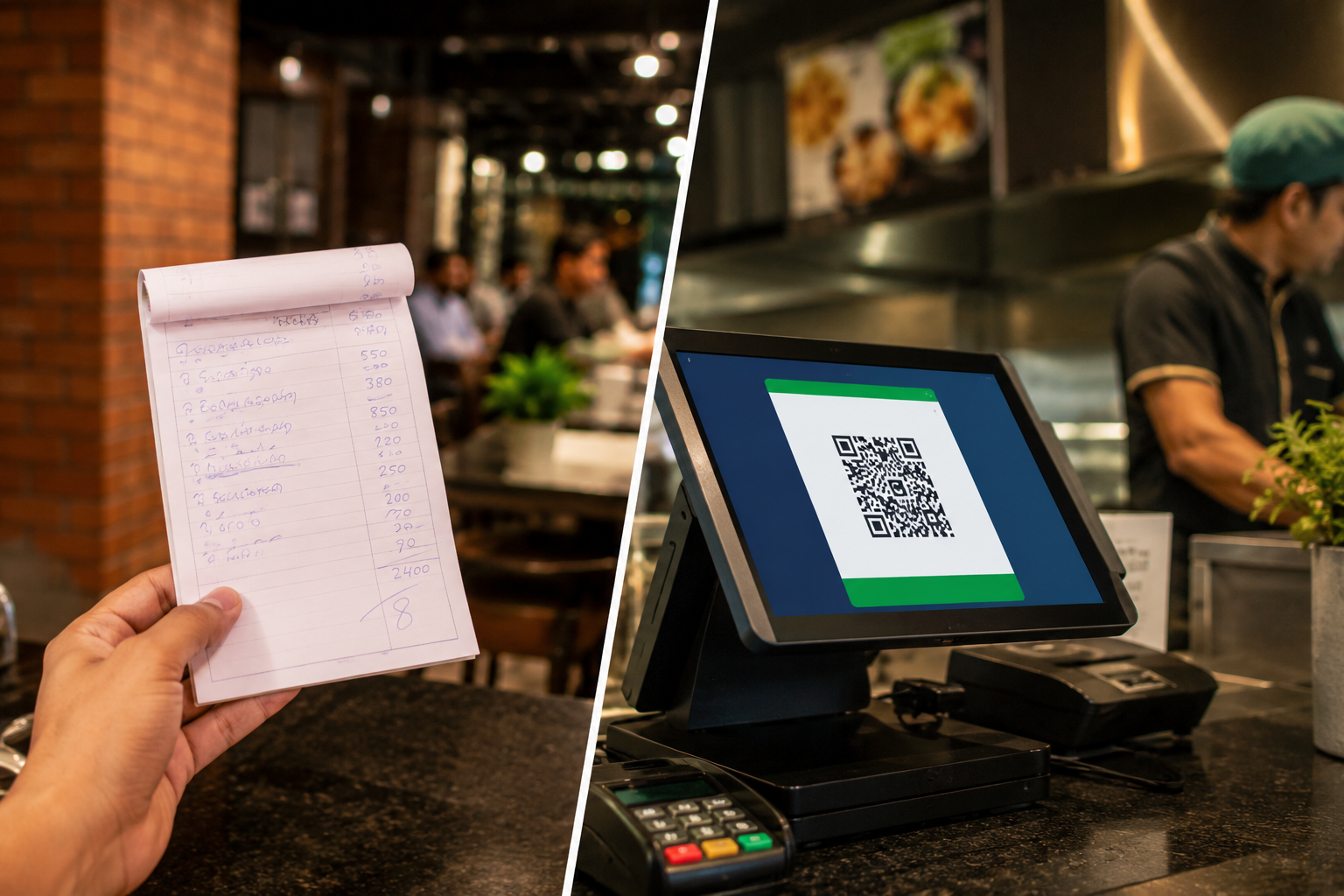
Many restaurants still rely on notebooks or spreadsheets.
These methods are time-consuming, prone to human error, and rarely provide real-time visibility into inventory.
By the time shortages are discovered, it's often too late.
3. Inconsistent Portion Sizes
If one chef uses 180 grams of chicken while another uses 220 grams for the same dish, inventory consumption becomes unpredictable.
Recipe inconsistency increases food costs and reduces inventory accuracy.
4. Unexpected Stockouts
Running out of essential ingredients during lunch or dinner service can damage customer experience and reduce revenue.
Without low stock alerts, restaurants often realize they need supplies only after it's affects operations.
5. Inventory Leakage
Not every inventory loss is caused by theft.
Unrecorded staff meals, preparation mistakes, complimentary dishes, damaged stock, and incorrect receiving procedures all contribute to inventory shrinkage.
Unless these activities are recorded, inventory reports become unreliable.
6. Rising Ingredient Prices
Restaurants across Pakistan have experienced frequent fluctuations in the cost of poultry, cooking oil, dairy products, imported cheese, spices, and fresh produce.
When purchasing decisions aren't backed by inventory data, businesses often overbuy expensive ingredients or miss opportunities to negotiate better supplier pricing.
Effective restaurant inventory management helps businesses respond more quickly to changing market conditions.
17 Restaurant Inventory Management Tips to Reduce Food Waste and Increase Profits
1. Standardize Every Recipe
One of the biggest reasons inventory numbers don't match sales is inconsistent food preparation.
Imagine two chefs preparing the same Zinger Burger.
One uses 160 grams of chicken, while another uses 200 grams.
Both dishes sell at the same price, but the restaurant's food costs increase significantly without management noticing.
Standardized recipes ensure that every dish uses the exact quantity of each ingredient.
Create recipe cards that specify:
- Ingredient quantities
- Preparation methods
- Portion sizes
- Garnishes
- Serving instructions
When recipes are standardized, inventory deductions become predictable, food costs remain consistent, and customers enjoy the same quality every time.
2. Set Smart Par Levels
Par levels define the minimum amount of stock your restaurant should always have available.
If inventory falls below this level, it's time to reorder.
Setting proper par levels prevents both overstocking and stock shortages.
For example:
- Chicken: 80 kg
- Cooking oil: 20 liters
- Burger buns: 500 units
- Mozzarella cheese: 30 kg
Review these levels regularly based on seasonal demand, promotional campaigns, and historical sales trends.
Restaurants that rely on guesswork often tie up unnecessary cash in excess inventory or struggle with frequent stockouts.
3. Follow the FIFO Method
FIFO stands for First In, First Out.
Older inventory should always be used before newly received stock.
This simple practice dramatically reduces spoilage and improves food inventory tracking.
Best practices include:
- Label every delivery with the receiving date.
- Store new inventory behind older stock.
- Regularly inspect expiration dates.
- Train staff to rotate inventory correctly.
FIFO is especially important for dairy products, meat, seafood, bakery items, and fresh vegetables, where shelf life is limited.
4. Track High-Value Ingredients Daily
Not every ingredient requires daily counting.
Focus on products that have the greatest financial impact, such as:
- Premium beef
- Seafood
- Cooking oil
- Imported cheese
- Coffee beans
- Specialty sauces
- High-value spices
Daily spot checks help identify unusual inventory variances before they become major financial losses.
5. Maintain a Food Waste Log
Food waste is one of the biggest hidden expenses in the restaurant industry.
Most owners know food is being wasted, but very few know where, why, or how much.
Without proper records, it's impossible to distinguish between unavoidable waste and operational inefficiencies.
Create a simple waste log that records:
- Ingredient discarded
- Quantity
- Reason for disposal
- Date and time
- Staff member responsible
- Manager approval (if applicable)
Common reasons include:
- Spoilage
- Incorrect preparation
- Burnt food
- Customer returns
- Expired inventory
- Overproduction
Over time, these records reveal patterns. You may discover that certain ingredients are consistently overordered or that specific menu items generate excessive waste.
This information allows you to make better purchasing and menu decisions.
6. Verify Every Supplier Delivery
Inventory management doesn't begin in the kitchen. It begins the moment stock arrives at your restaurant.
Never assume a supplier has delivered exactly what was ordered.
Before accepting any shipment:
- Match the delivery against the purchase order.
- Count quantities carefully.
- Inspect packaging for damage.
- Check expiry dates.
- Verify temperatures for chilled and frozen items.
- Weigh high-value ingredients if necessary.
Accepting incorrect deliveries can lead to inventory discrepancies that become difficult to trace later.
A five-minute inspection at receiving can prevent thousands of rupees in losses.
7. Schedule Inventory Counts at the Right Time
Inventory counts are only useful if they're accurate.
Counting stock while the kitchen is busy often leads to mistakes because ingredients are constantly moving between storage and preparation stations.
Instead, perform full inventory counts:
- Before the kitchen opens
- After closing
- During periods when no food preparation is taking place
Many restaurants also use cycle counting, where different inventory categories are counted throughout the week instead of conducting one large monthly audit.
For example:
This approach makes inventory management far less overwhelming.
8. Monitor Inventory Variance
One of the most important restaurant inventory management metrics is inventory variance.
Variance measures the difference between:
Expected Inventory
vs.
Actual Physical Inventory
For example:
According to your sales records, you should have 42 kg of chicken remaining.
Your physical count shows only 35 kg.
The missing 7 kg represents inventory variance.
Possible causes include:
- Over-portioning
- Unrecorded waste
- Supplier shortages
- Theft
- Incorrect recipe quantities
- Data entry mistakes
Tracking variance regularly helps identify operational problems before they become expensive.
9. Record Staff Meals and Complimentary Orders
Staff meals, tasting portions, and complimentary dishes all consume inventory.
Many restaurants forget to record these transactions because no payment is involved.
However, ingredients are still leaving the kitchen.
A better approach is to process every staff meal through your POS system using:
- Employee Meal
- Complimentary
- Internal Consumption
This ensures inventory levels remain accurate and food costs reflect actual ingredient usage.
10. Forecast Demand Instead of Guessing
Ordering inventory based on intuition often results in either excess stock or shortages.
Instead, use historical sales data to forecast future demand.
Consider factors such as:
- Weekends
- Public holidays
- Ramadan
- Eid
- Cricket tournaments
- Weather changes
- Local events
For example, restaurants frequently experience increased demand during Ramadan evenings and Eid holidays.
Preparing for these seasonal changes helps avoid emergency purchases while reducing unnecessary stock accumulation after demand returns to normal.
How Technology Improves Restaurant Inventory Management
As restaurants grow, manual inventory tracking becomes increasingly difficult.
Spreadsheets, notebooks, and WhatsApp messages may work for a small café, but they quickly become inefficient for busy restaurants, cloud kitchens, and multi-branch businesses.
Modern restaurant inventory management software automates many of the repetitive tasks that consume valuable time.
Let's look at some of the biggest advantages.
11. Automate Food Inventory Tracking
One of the biggest limitations of manual inventory systems is delayed updates.
Stock levels are usually adjusted only after someone remembers to update a spreadsheet.
This creates blind spots throughout the day.
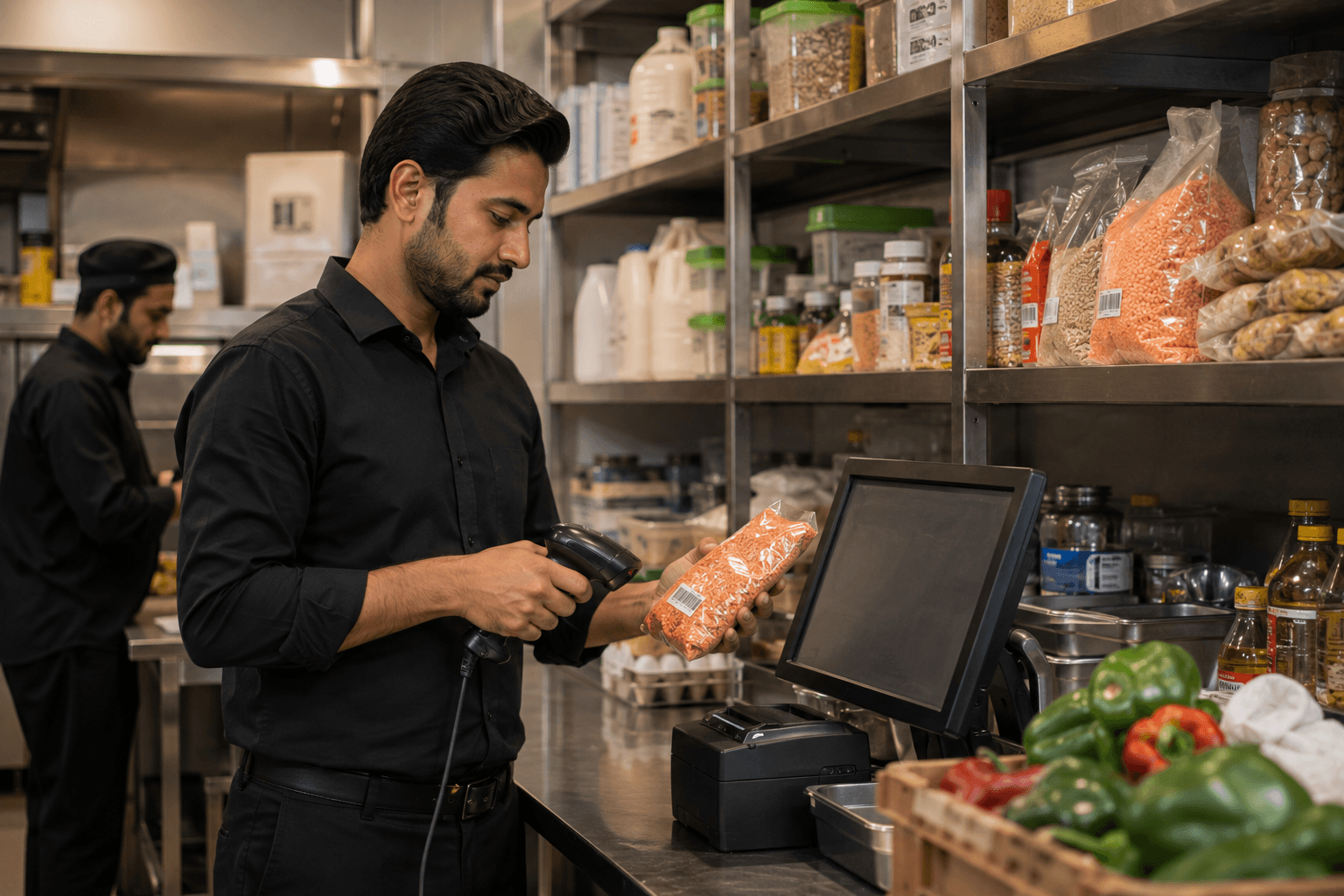
With automated food inventory tracking, every sale immediately updates inventory.
For example:
A customer orders:
- Chicken Burger
- Fries
- Soft Drink
The system automatically deducts:
- Chicken fillet
- Burger bun
- Lettuce
- Sauce
- Fries
- Cooking oil
- Beverage stock
No manual calculations required.
This gives restaurant owners real-time visibility into inventory throughout the day.
12. Enable Low Stock Alerts
One of the easiest ways to avoid stockouts is by using automated low stock alerts.
Instead of discovering missing ingredients during dinner service, the system notifies you when inventory reaches predefined reorder levels.
Low stock alerts help restaurants:
- Prevent menu disruptions
- Improve purchasing decisions
- Avoid emergency supplier orders
- Reduce customer disappointment
Rather than relying on memory, managers receive timely notifications before critical inventory runs out.
13. Digitize Purchase Orders
Paper purchase orders often create confusion.
Items may be duplicated, forgotten, or approved without verifying current inventory levels.
Digital purchase orders simplify the entire purchasing process by allowing managers to:
- Review current stock
- Compare supplier prices
- Track order history
- Maintain purchasing records
- Reduce duplicate orders
Over time, these records also help evaluate supplier performance and identify cost-saving opportunities.
14. Centralize Multi-Branch Inventory
Managing inventory across multiple branches is one of the biggest operational challenges for growing restaurant businesses.
Without centralized visibility, one branch may have excess stock while another experiences shortages.
A centralized inventory management system allows restaurant owners to:
- View inventory across all locations
- Transfer stock between branches
- Monitor warehouse inventory
- Standardize purchasing
- Compare branch performance
This is especially valuable for restaurant chains and cloud kitchen operators expanding into multiple cities.
15. Track Expiry Dates Automatically
Expiry tracking is often overlooked until food has already spoiled.
Modern inventory systems allow restaurants to monitor expiry dates digitally instead of relying on handwritten labels.
This helps managers:
- Identify products nearing expiry
- Prioritize stock rotation
- Reduce spoilage
- Improve food safety
Expiry tracking is particularly valuable for dairy products, seafood, meat, sauces, and imported ingredients with limited shelf lives.
16. Analyze Food Costs and Menu Profitability
Not every best-selling menu item generates healthy profits.
A dish may sell hundreds of times each week but still produce low margins because ingredient costs have increased.
By combining sales data with inventory consumption, restaurant owners can identify:
- High-profit menu items
- Low-margin dishes
- Ingredients with rising costs
- Opportunities to adjust pricing
- Recipes that require portion optimization
This information supports smarter menu engineering and better business decisions.
17. Choose Restaurant Inventory Management Software That Grows With You
As your restaurant grows, inventory management becomes increasingly complex.
Adding new branches, expanding menus, increasing supplier relationships, and managing larger teams all place additional pressure on manual systems.
Restaurant inventory management software brings inventory, purchasing, recipes, sales, and reporting together in one platform.
Instead of spending hours reconciling spreadsheets, owners gain real-time visibility into their entire operation.
For growing restaurants, automation isn't just about saving time. It's about making faster, more informed decisions.
Manual Inventory Management vs Restaurant Inventory Management Software
While spreadsheets may work for very small restaurants, software becomes increasingly valuable as operations grow.
Why Pakistani Restaurants Are Moving to Digital Inventory Management
Restaurants in Pakistan operate in a challenging environment.
Ingredient prices change frequently, customer demand fluctuates during Ramadan and Eid, and businesses must balance quality with increasingly tight profit margins.
Manual inventory systems often struggle to keep up with these realities.
Digital restaurant inventory management helps businesses respond faster by providing:
- Real-time stock visibility
- Better purchasing decisions
- Faster inventory audits
- Improved cost control
- Reduced food waste
- Greater operational transparency
For restaurant owners focused on sustainable growth, digital inventory management has become an operational necessity rather than a luxury.
How Oscar POS Simplifies Restaurant Inventory Management
Managing inventory shouldn't require juggling spreadsheets, handwritten logs, and manual calculations.
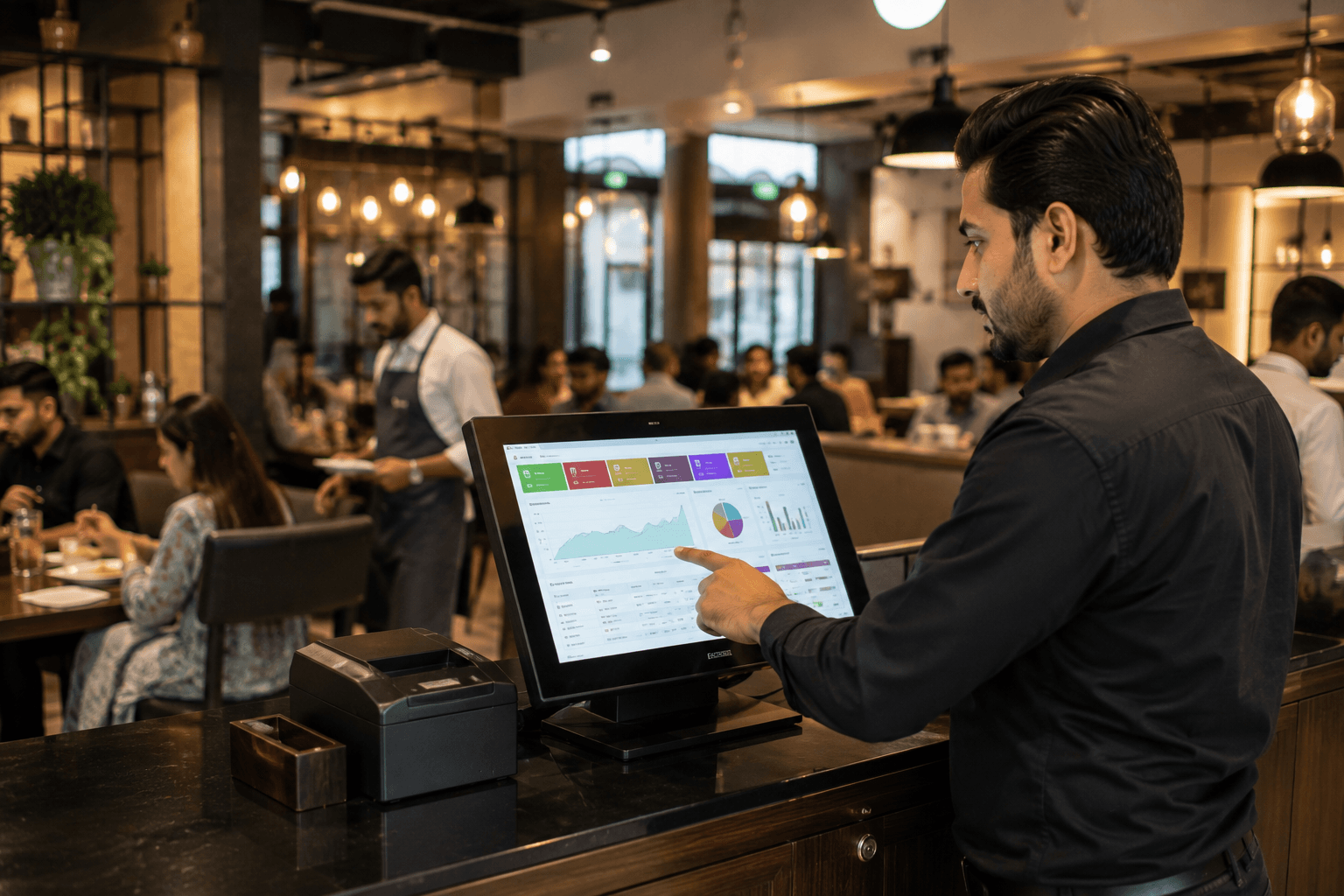
Oscar POS brings your restaurant's inventory, billing, purchasing, and reporting together in one cloud-based platform.
With Oscar POS, restaurants can:
- Track ingredient consumption in real time through automated food inventory tracking.
- Set low stock alerts to reorder ingredients before they run out.
- Link standardized recipes to menu items for accurate inventory deductions.
- Monitor inventory variance and identify potential leakage.
- Manage inventory across multiple branches from a centralized dashboard.
- Generate reports that help reduce food waste and improve profitability.
- Integrate inventory with billing, sales analytics, and FBR-compliant invoicing for a more connected operation.
Whether you run a café, restaurant, cloud kitchen, or a growing chain, Oscar POS helps you spend less time counting stock and more time growing your business.
Frequently Asked Questions
1. What is restaurant inventory management?
Restaurant inventory management is the process of tracking ingredients, beverages, packaging materials, and other supplies used in a restaurant. It helps businesses monitor stock levels, reduce food waste, control costs, and ensure ingredients are always available when needed.
2. Why is restaurant inventory management important?
Effective restaurant inventory management reduces food waste, prevents stock shortages, improves purchasing decisions, controls food costs, and protects profit margins. It also provides greater visibility into daily operations and helps restaurant owners make data-driven business decisions.
3. What is food inventory tracking?
Food inventory tracking is the process of monitoring ingredient quantities as they are received, stored, used, and reordered. Modern restaurant inventory management software automates this process by updating stock levels whenever a menu item is sold.
4. How often should restaurants count inventory?
Most restaurants perform a complete inventory count weekly, while high-value ingredients such as meat, seafood, dairy, and cooking oil should be checked daily. Regular inventory counts help identify discrepancies before they become costly.
5. What causes inventory loss in restaurants?
Common causes include: Food spoilage Over-portioning Unrecorded waste Supplier shortages Theft Incorrect inventory counts Staff meals that aren't recorded Poor stock rotation Tracking these issues consistently helps reduce inventory shrinkage over time.
6. What is the FIFO method in restaurant inventory management?
FIFO stands for First In, First Out. It means older inventory should always be used before newer stock. This reduces spoilage, minimizes waste, and ensures ingredients are used before they expire.
7. What are low stock alerts?
Low stock alerts automatically notify managers when inventory falls below predefined reorder levels. Instead of discovering shortages during service hours, restaurants can reorder ingredients before they run out, helping avoid disruptions and lost sales.
8. Can restaurant inventory management software reduce food waste?
Yes. Restaurant inventory management software helps reduce food waste by providing real-time stock visibility, tracking expiry dates, monitoring ingredient usage, and identifying waste patterns. It also improves purchasing accuracy so restaurants avoid over-ordering perishable ingredients.
9. How does restaurant inventory management software work?
Restaurant inventory management software connects inventory with sales, recipes, and purchasing. Whenever a customer orders a menu item, the system automatically deducts the corresponding ingredients from inventory. It can also generate reports, monitor stock levels, send low stock alerts, and help forecast purchasing needs.
10. Why choose Oscar POS for restaurant inventory management?
Oscar POS combines restaurant billing, food inventory tracking, recipe management, purchasing, analytics, and FBR-compliant invoicing in one cloud-based platform. Restaurants can automate inventory updates, reduce manual work, monitor multiple branches, and make smarter operational decisions from a single dashboard.
Take Control of Your Restaurant Inventory with Oscar POS
Successful restaurants don't leave inventory to chance.
Every ingredient sitting in your kitchen represents money you've invested. When that inventory isn't tracked properly, small daily inefficiencies can quietly turn into significant losses through spoilage, over-ordering, inaccurate portioning, or stock shortages.
By implementing the strategies in this guide, you can build a more efficient inventory process, reduce food waste, improve purchasing decisions, and protect your margins.
As your business grows, manual inventory methods become harder to manage. Spreadsheets and handwritten stock registers may work for a small operation, but they rarely provide the speed, accuracy, and visibility that modern restaurants need.
Oscar POS simplifies restaurant inventory management by bringing billing, inventory, recipe costing, purchasing, reporting, and analytics together in one cloud-based system. With automated food inventory tracking, real-time stock visibility, and intelligent low stock alerts, you can spend less time counting inventory and more time delivering great dining experiences.
Ready to simplify restaurant inventory management?
Explore how Oscar POS helps restaurants across Pakistan reduce waste, improve stock control, and grow with confidence.