Restaurant Reservation Software vs Manual Booking: Which Is Better for Pakistani Restaurants?
July 15, 2026
.Blog
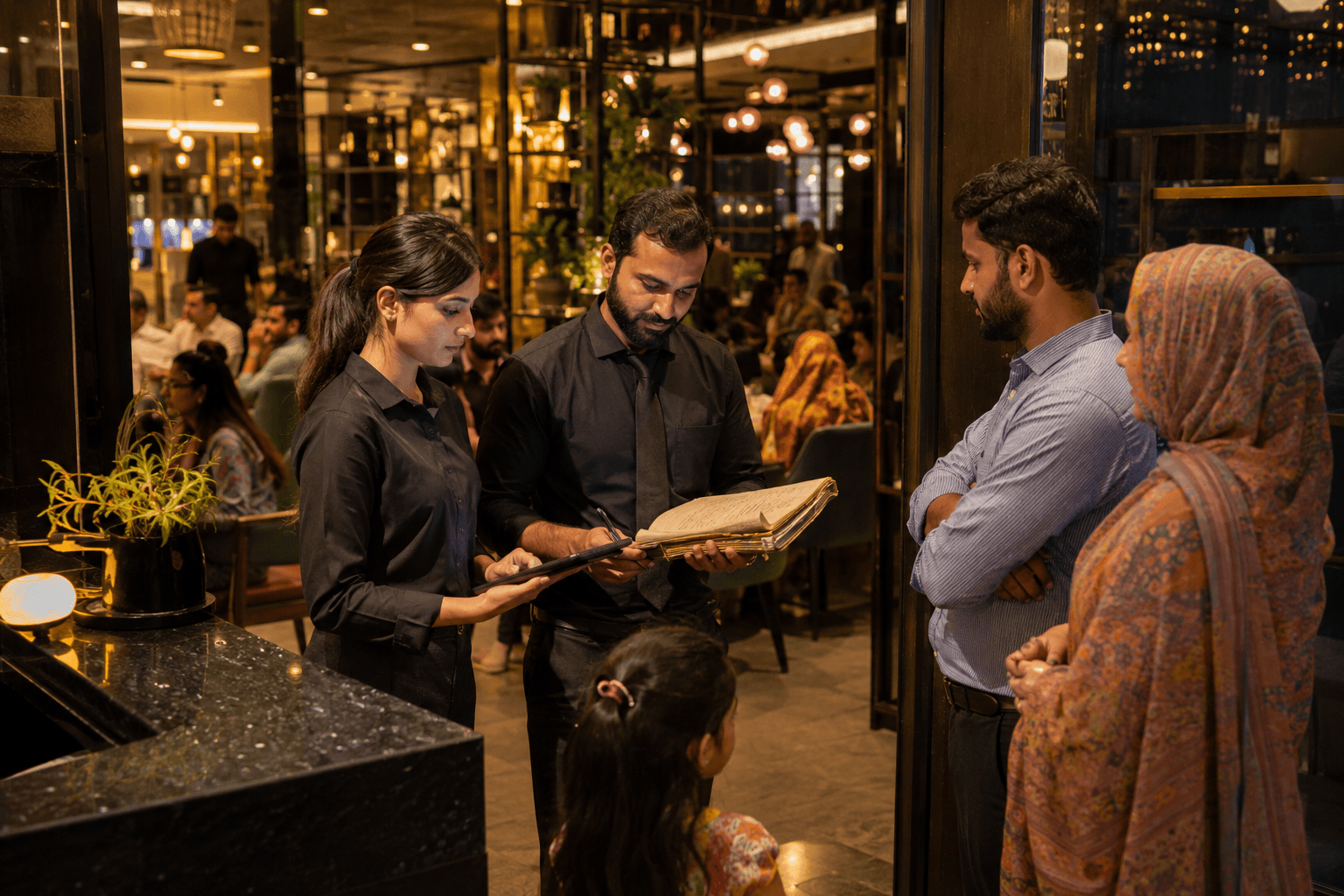
Running your restaurant with a paper diary may have worked a few years ago. But as customer expectations grow and operations become more complex, manual booking can quickly turn into missed reservations, double bookings, and lost revenue. Here's how restaurant reservation software compares to traditional booking methods, and why more restaurants across Pakistan are making the switch.
Introduction
It's Friday evening.
The dining area is nearly full. Your phone keeps ringing with reservation requests, customers are messaging on WhatsApp asking if tables are available, and a family of eight has just arrived insisting they booked a table yesterday.
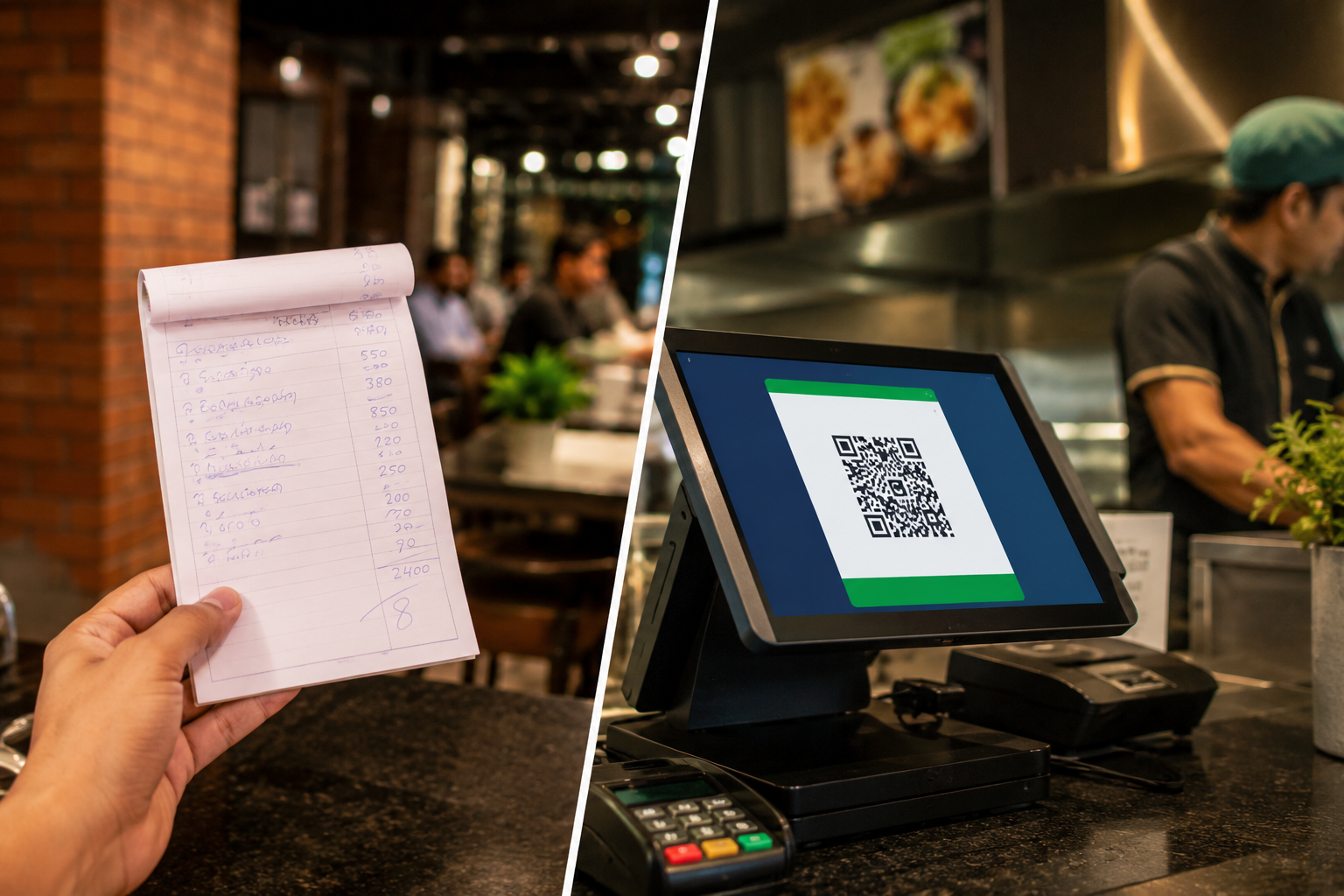
Your host flips through a handwritten booking diary while another staff member scrolls through WhatsApp conversations trying to find the reservation. Meanwhile, customers waiting near the entrance are becoming impatient.
For many restaurant owners in Pakistan, this isn't an unusual situation. Reservations are often managed using notebooks, phone calls, WhatsApp messages, or even staff memory. While these methods may seem simple, they become increasingly difficult to manage as your restaurant grows.
A single missed reservation or double-booked table doesn't just create confusion. It affects customer experience, slows down service, and can cost your restaurant valuable revenue.
This is where restaurant reservation software makes a significant difference.
Instead of relying on handwritten notes and manual coordination, modern reservation systems organize bookings in one place, automate confirmations, provide real-time table availability, and help your team deliver a smoother dining experience from the moment a customer books until they leave the restaurant.
In this guide, we'll compare restaurant reservation software vs manual booking, explain the advantages of digital reservations, and help you decide which approach is better for your restaurant.
Why Many Restaurants Still Use Manual Booking
Despite advances in restaurant technology, many restaurants across Pakistan still manage reservations manually.
Common booking methods include:
- Paper reservation diaries
- Phone calls
- WhatsApp messages
- Facebook or Instagram inboxes
- Excel spreadsheets
- Staff notebooks
For small restaurants with only a handful of reservations each day, these methods may appear sufficient.
Restaurant owners often believe:
- "We've always done it this way."
- "Our staff remembers the bookings."
- "Most customers call anyway."
- "A notebook is cheaper than software."
These assumptions usually hold true only while reservations remain manageable.
As soon as customer traffic increases, especially during weekends, Ramadan, Eid holidays, family gatherings, or special events, manual systems begin showing their limitations.
Instead of helping operations run smoothly, they create bottlenecks that affect both staff efficiency and customer satisfaction.
What Is Manual Restaurant Booking?
Manual booking simply means reservations are managed without a dedicated reservation system.
Every booking depends on staff recording customer information themselves.
A typical workflow looks like this:
- Customer calls or sends a WhatsApp message.
- Staff checks a notebook or diary.
- Reservation details are written manually.
- Staff tries to remember table availability.
- Customers arrive hoping everything was recorded correctly.
There is no automatic confirmation, no real-time table tracking, and no centralized record of customer history.
Everything depends on human accuracy.
While this approach may seem manageable for a new restaurant, it becomes increasingly difficult as reservation volumes grow.
The Hidden Costs of Manual Booking
Many restaurant owners believe manual booking is free because they don't pay for software.
In reality, the cost appears in other ways.
1. Double Bookings
One of the biggest risks with manual reservations is assigning the same table twice.
This can happen when:
- Two staff members answer separate phone calls.
- A WhatsApp booking isn't written in the diary.
- Someone misreads handwritten notes.
- Reservation times overlap.
The result is an uncomfortable experience for both customers and staff.
Customers who planned an evening with family or friends don't want to hear that their reserved table isn't available.
Even if you eventually accommodate them, the first impression has already been damaged.
2. Missed Reservations
Restaurants receive bookings through multiple channels:
- Phone calls
- Facebook Messenger
- Walk-ins
Without one centralized booking system, it's surprisingly easy for reservations to be overlooked.
One forgotten message can mean:
- An empty table.
- An unhappy customer.
- Negative online reviews.
- Lost revenue.
3. No Visibility into Table Availability
A paper diary tells you who booked a table.
It doesn't tell you:
- Which tables are currently occupied.
- Which tables will become available next.
- How long guests have been seated.
- Which tables are reserved later in the evening.
As a result, staff often spend valuable time checking with servers before confirming new reservations.
During busy service, these delays add unnecessary pressure.
4. No Customer History
Imagine a regular customer visits your restaurant every month.
They always request outdoor seating.
They usually celebrate birthdays at your restaurant.
They often order the same dishes.
With manual booking, this information disappears after every visit.
Your staff starts from zero every time.
Restaurant reservation software automatically builds customer profiles, allowing your team to provide more personalized service and strengthen customer relationships.
5. No Protection Against No-Shows
No-shows are one of the biggest challenges restaurants face.
A customer reserves a table for eight people.
The restaurant keeps the table available.
Nobody arrives.
With manual booking, staff often discover the no-show only after valuable seating time has been lost.
Reservation software helps reduce this problem by sending automated confirmation messages and reminders before the booking, giving customers an opportunity to confirm, reschedule, or cancel.
This improves table utilization and helps your restaurant serve more guests during busy hours.
6. Staff Spend More Time Managing Reservations Than Serving Guests
Front-of-house staff should focus on creating a welcoming experience.
Instead, manual booking often requires them to:
- Answer repetitive phone calls.
- Search through notebooks.
- Check WhatsApp conversations.
- Confirm table availability manually.
- Rewrite reservation details.
- Call customers back.
These administrative tasks reduce the time available for greeting guests, coordinating seating, and supporting service during peak hours.
As reservation volume grows, manual processes become increasingly difficult to manage without adding more staff.
7. No Reporting or Business Insights
Manual booking records reservations.
It doesn't provide insights.
Questions like these become difficult to answer:
- Which days are your busiest?
- Which reservation times fill up first?
- How many bookings become no-shows?
- Which customers visit most frequently?
- What's your average table occupancy?
- Which branch receives the most reservations?
Without reliable data, improving restaurant operations becomes largely a matter of guesswork.
Restaurant reservation software turns every booking into useful business intelligence, helping you make better staffing, marketing, and operational decisions.
The difference becomes even more noticeable during busy service, when dozens of bookings, walk-ins, and table changes happen within a short period.
Why Manual Booking Starts Breaking Down as Restaurants Grow
Manual systems often work when reservations are limited.
But growth introduces complexity.
As your restaurant becomes more popular, you'll likely experience:
- More reservations every day
- Larger group bookings
- Multiple booking channels
- More walk-ins
- Repeat customers
- Longer waiting lists
- More staff members handling reservations
Without a centralized reservation system, every additional booking increases the risk of mistakes.
Restaurant reservation software scales with your business without adding unnecessary administrative work.
Beyond Reservations: Better Table Management
Reservations are only one part of front-of-house operations.
You also need to know what's happening inside your restaurant at any given moment.
Modern table booking systems help you manage:
1. Occupied Tables
Know exactly which tables are currently serving guests.
2. Reserved Tables
Prevent accidental seating by clearly marking future reservations.
3. Available Tables
See which tables can be assigned immediately.
4. Cleaning Status
After guests leave, tables can be marked as unavailable until they're cleaned and ready for the next party.
5. Waitlists
Instead of asking customers to stand around and wait, staff can organize waiting guests in a structured queue and seat them as soon as tables become available.
This creates a smoother dining experience while improving table turnover.
Reservation Software Helps Reduce No-Shows
Every empty reserved table represents lost revenue.
No-shows are especially costly during:
- Friday evenings
- Weekend dinner service
- Ramadan iftar
- Eid holidays
- Public holidays
- Valentine's Day
- Corporate dinners
- Family celebrations
Restaurant reservation software helps reduce no-shows by:
- Sending confirmation messages
- Sending reminder notifications before the reservation
- Allowing customers to update or cancel bookings
- Giving staff visibility into reservation status
Even a small reduction in no-shows can significantly improve occupancy during peak hours.
Why Reservation Software Is More Than a Digital Diary
Some restaurant owners think reservation software simply replaces a notebook with a computer.
In reality, it transforms how reservations are managed.
Instead of depending on individual staff members to remember bookings, confirm tables, and track customer information, the system handles these tasks consistently and accurately.
Your team spends less time on administrative work and more time delivering great service.
For customers, the experience is also smoother. They receive confirmation that their booking is secure, spend less time waiting for a table, and enjoy a more organized visit from the moment they arrive.
As restaurants become busier and customer expectations continue to rise, this shift from manual coordination to digital reservation management becomes a competitive advantage rather than just a convenience.
Why More Pakistani Restaurants Are Choosing Restaurant Reservation Software
Every restaurant wants the same outcome: keep tables full, serve guests efficiently, and provide an experience that encourages customers to return.
Restaurant reservation software helps achieve these goals by improving the way reservations, seating, and customer information are managed. While the benefits apply to restaurants everywhere, they are especially valuable in Pakistan, where dining habits, family gatherings, and peak-hour traffic create unique operational challenges.
1. Manage Weekend Rushes with Confidence
For many restaurants, the busiest periods aren't spread evenly throughout the week.
Friday evenings, Saturday nights, Sunday family dinners, and public holidays can generate more reservations than an entire weekday.
When reservations are managed manually, staff often struggle to keep track of:
- Available tables
- Upcoming bookings
- Walk-in customers
- Waiting lists
- Reservation changes
A restaurant reservation system gives your team a live view of the dining floor, allowing them to make informed seating decisions without searching through notebooks or WhatsApp chats.
Instead of reacting to problems, your staff can stay ahead of them.
2. Handle Ramadan, Eid, and Seasonal Demand
Restaurants in Pakistan experience dramatic shifts in customer demand during Ramadan, Eid holidays, wedding season, and special occasions such as Mother's Day and Valentine's Day.
Iftar reservations, in particular, require careful planning because nearly every table may be booked within the same time window.
Restaurant reservation software helps by allowing you to:
- Accept reservations in advance
- Control booking slots
- Allocate tables based on party size
- Prevent overbooking
- Organize waiting lists
- Prepare staff for expected guest volume
Better planning results in smoother service and a better experience for guests.
3. Improve Table Turnover Without Rushing Guests
A full restaurant doesn't always mean maximum revenue.
If tables remain occupied longer than expected while other guests are waiting, your restaurant serves fewer customers throughout the evening.
Reservation software helps managers understand:
- Reservation timing
- Table occupancy
- Expected arrivals
- Average dining duration
- Table availability throughout service
This visibility makes it easier to seat guests efficiently while maintaining a comfortable dining experience.
4. Deliver Better Customer Service
Customers notice when restaurants remember them.
Imagine a returning guest who always requests window seating or books a table for family dinners every month.
With manual booking, staff must rely on memory.
With restaurant reservation software, customer profiles can store useful information such as:
- Previous reservations
- Preferred seating
- Contact details
- Special requests
- Celebration notes
This allows your team to deliver a more personalized experience that encourages repeat visits.
5. Reduce Administrative Work
Every phone call, WhatsApp message, and handwritten reservation requires staff time.
Instead of greeting guests or supporting service, employees spend time:
- Answering reservation inquiries
- Checking availability
- Writing booking details
- Confirming reservations
- Searching through previous messages
Restaurant reservation software automates many of these repetitive tasks, allowing your front-of-house team to focus on hospitality instead of paperwork.
Restaurant Reservation Software Works Even Better with Your POS
Reservations are only one part of running a successful restaurant.
You also need to manage billing, inventory, kitchen operations, payments, reporting, and customer relationships.
When your reservation software operates independently from the rest of your business, staff often have to update information across multiple systems. This increases the chances of mistakes and slows down service.
An integrated restaurant management platform eliminates these disconnected workflows.
For example, when reservations work alongside your POS system, your team can:
- View reservations and table status from one dashboard
- Seat guests and begin billing without switching between systems
- Monitor table occupancy in real time
- Access customer history during service
- Generate reports on reservations and table utilization
- Manage multiple restaurant locations from a central platform
Instead of using separate tools for reservations, billing, and reporting, everything works together to support faster and more efficient operations.
Signs Your Restaurant Has Outgrown Manual Booking
Many restaurant owners don't realize they've outgrown manual booking until it starts affecting daily operations.
If any of the following situations sound familiar, it may be time to switch to restaurant reservation software.
1. You're Receiving Reservations from Multiple Channels
Customers now contact restaurants through phone calls, WhatsApp, Instagram, Facebook, and your website.
Managing all these conversations manually increases the likelihood of missed bookings and inconsistent communication.
2. Staff Frequently Ask About Table Availability
If employees regularly need to check with each other before confirming a reservation, your booking process is slowing down service.
Real-time table visibility removes this uncertainty.
3. Double Bookings Happen More Often Than They Should
Even occasional double bookings can damage customer trust.
As reservation volume grows, relying on handwritten notes or memory becomes increasingly risky.
4. No-Shows Leave Tables Empty
If reserved tables regularly sit empty because customers don't arrive, your restaurant is losing revenue during valuable service hours.
Automated confirmations and reminders help reduce this problem.
5. You Don't Know Which Customers Return Most Often
Loyal customers are among your restaurant's most valuable assets.
Without a digital reservation system, it's difficult to identify repeat guests or recognize valuable customer trends.
6. You Operate Multiple Branches
Managing reservations across several locations using notebooks or separate spreadsheets quickly becomes inefficient.
Restaurant reservation software provides centralized visibility while allowing each branch to manage its own bookings.
Why Oscar Is Built for Restaurants in Pakistan
Restaurant reservation software is most effective when it works as part of a complete restaurant management system.
Oscar helps restaurants manage far more than table bookings.
With Oscar, restaurants can manage:
- Table reservations
- Restaurant POS
- Billing and invoicing
- Inventory management
- Customer profiles
- Business reporting
- Multi-branch operations
- Staff management
- Payment tracking
Instead of investing in separate systems that don't communicate with each other, restaurants can manage their front-of-house and back-of-house operations from a single platform.
Whether you operate a café, casual dining restaurant, fine dining venue, or a growing restaurant chain, Oscar gives your team the tools to serve customers more efficiently while giving management better visibility into daily operations.
Frequently Asked Questions
1. What is restaurant reservation software?
Restaurant reservation software is a digital system that allows restaurants to accept, organize, and manage table bookings while tracking table availability, customer information, and reservation history from a centralized dashboard.
2. Is restaurant reservation software suitable for small restaurants?
Yes. Even smaller restaurants benefit from organized reservations, fewer booking mistakes, and improved customer service. As the business grows, the software scales with it.
3. Can customers reserve tables online?
Yes. Most restaurant reservation systems allow customers to book tables through a website or social media channels, depending on the platform.
4. Can restaurant reservation software reduce no-shows?
Yes. Automated confirmations and reminder messages encourage customers to confirm or cancel reservations before their scheduled visit, helping restaurants improve table occupancy.
5. Can reservation software integrate with restaurant POS software?
Modern restaurant reservation software can integrate with restaurant POS systems, allowing reservations, billing, table management, and reporting to work together.
6. Is restaurant reservation software better than managing bookings on WhatsApp?
WhatsApp is useful for communicating with customers, but it isn't designed to manage reservations. Dedicated reservation software provides real-time availability, customer records, automated confirmations, reporting, and table management that WhatsApp alone cannot offer.
7. What should restaurants look for when choosing reservation software?
Look for software that offers online booking, table management, automated confirmations, customer profiles, reporting, POS integration, and support for multi-branch operations.
8. What is the best restaurant reservation software in Pakistan?
The right solution depends on your restaurant's size and operational needs. If you're looking for a platform that combines restaurant reservations with POS, billing, inventory management, reporting, and customer management, Oscar provides an all-in-one solution built for restaurants in Pakistan.
Final Thoughts
A paper diary may seem familiar, but familiarity doesn't always support growth.
As reservation volumes increase, manual booking becomes harder to manage. Staff spend more time coordinating reservations, customers experience unnecessary delays, and simple mistakes can lead to lost revenue and damaged trust.
Restaurant reservation software replaces these manual processes with a faster, more organized approach. From accepting online bookings and managing tables in real time to reducing no-shows and building customer relationships, it helps restaurants operate more efficiently while delivering a better guest experience.
If your restaurant still relies on notebooks, spreadsheets, or scattered WhatsApp conversations to manage reservations, now is a good time to evaluate whether those processes can keep up with your business.
Oscar brings restaurant reservations, POS, billing, inventory, customer management, and reporting together in one platform built for Pakistani restaurants. Book a demo to see how Oscar can simplify your operations and help you deliver a smoother dining experience from reservation to payment.