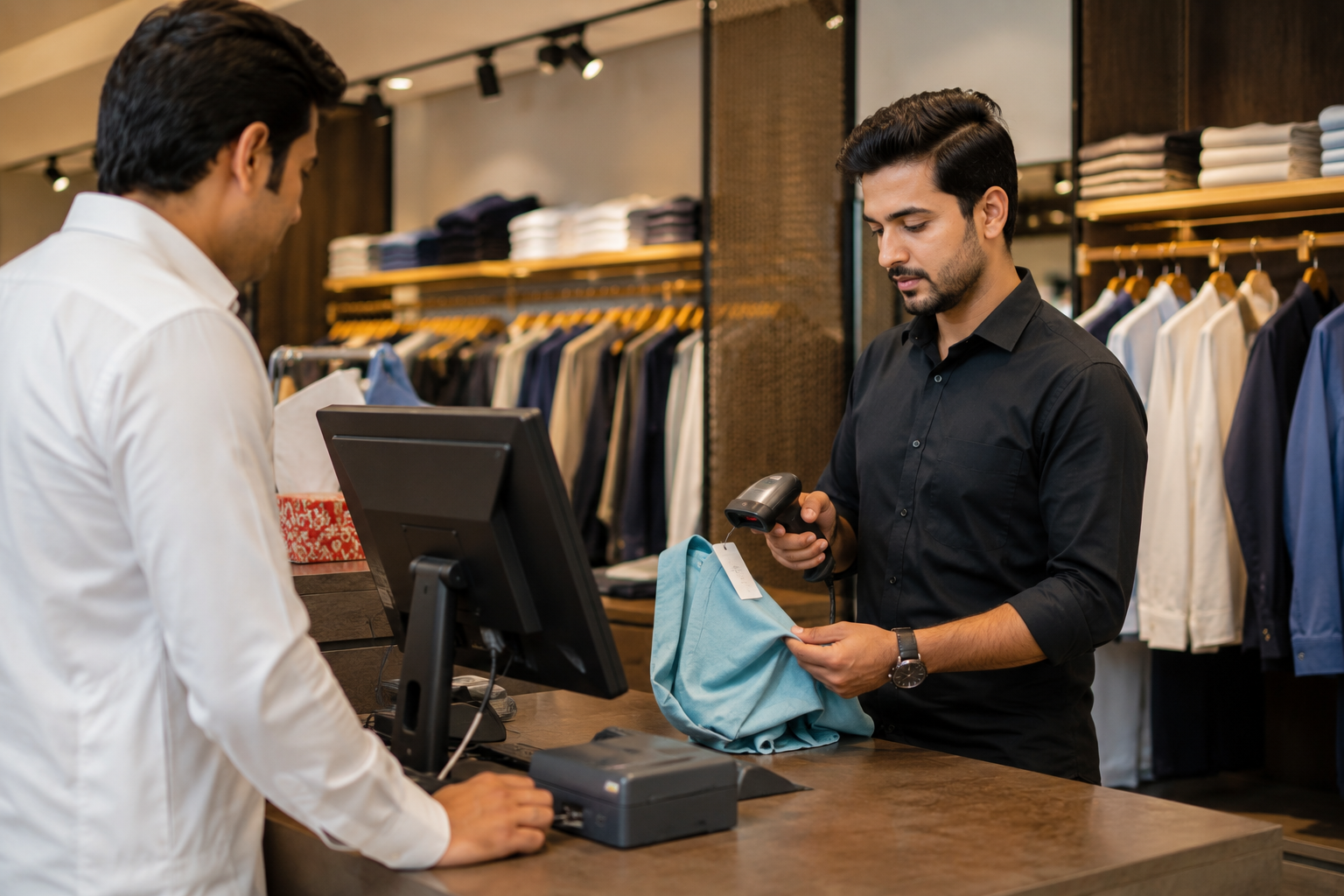
QR Code Payments in Pakistan: Complete Guide for Customers and Businesses
September 24, 2026
.Blog
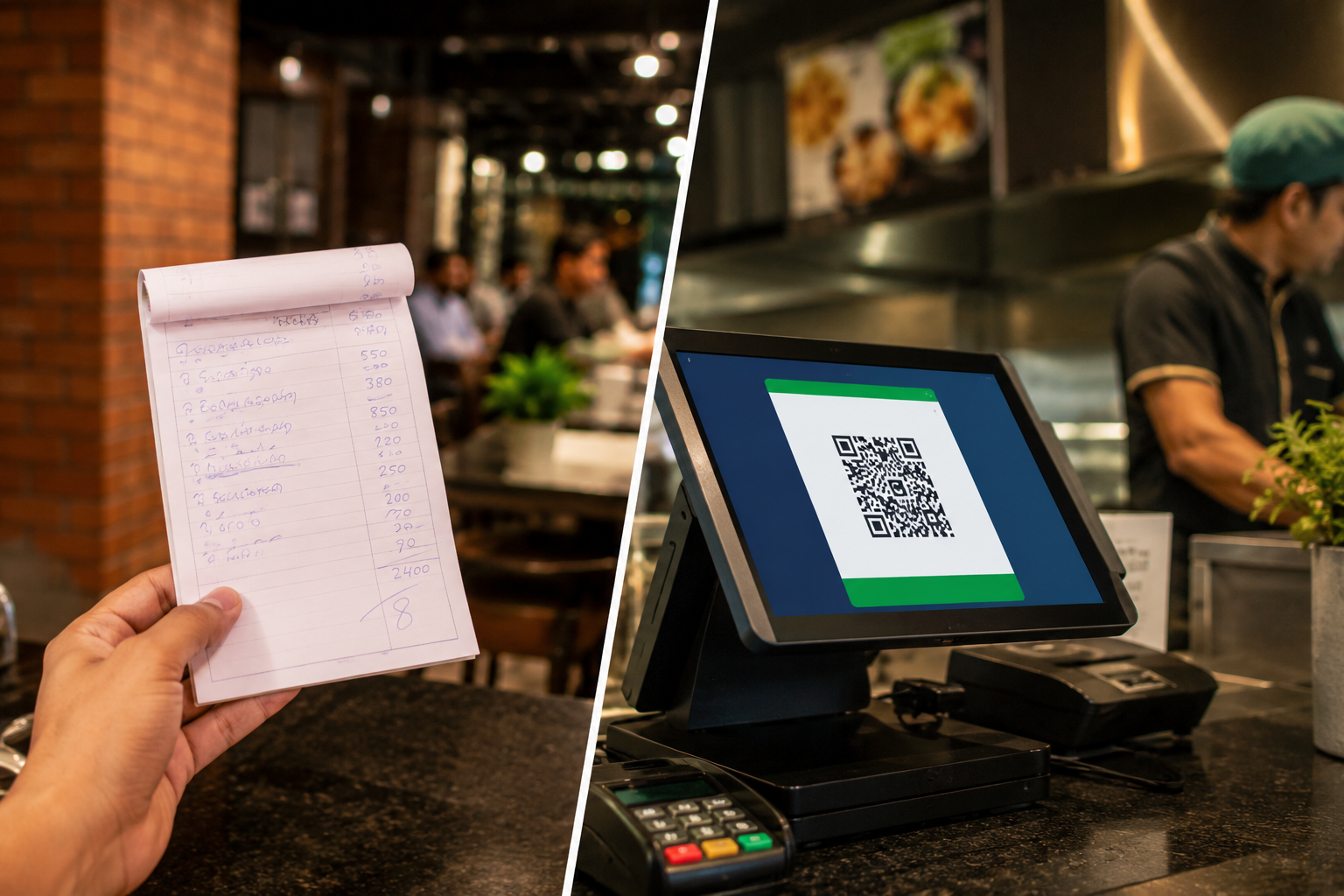
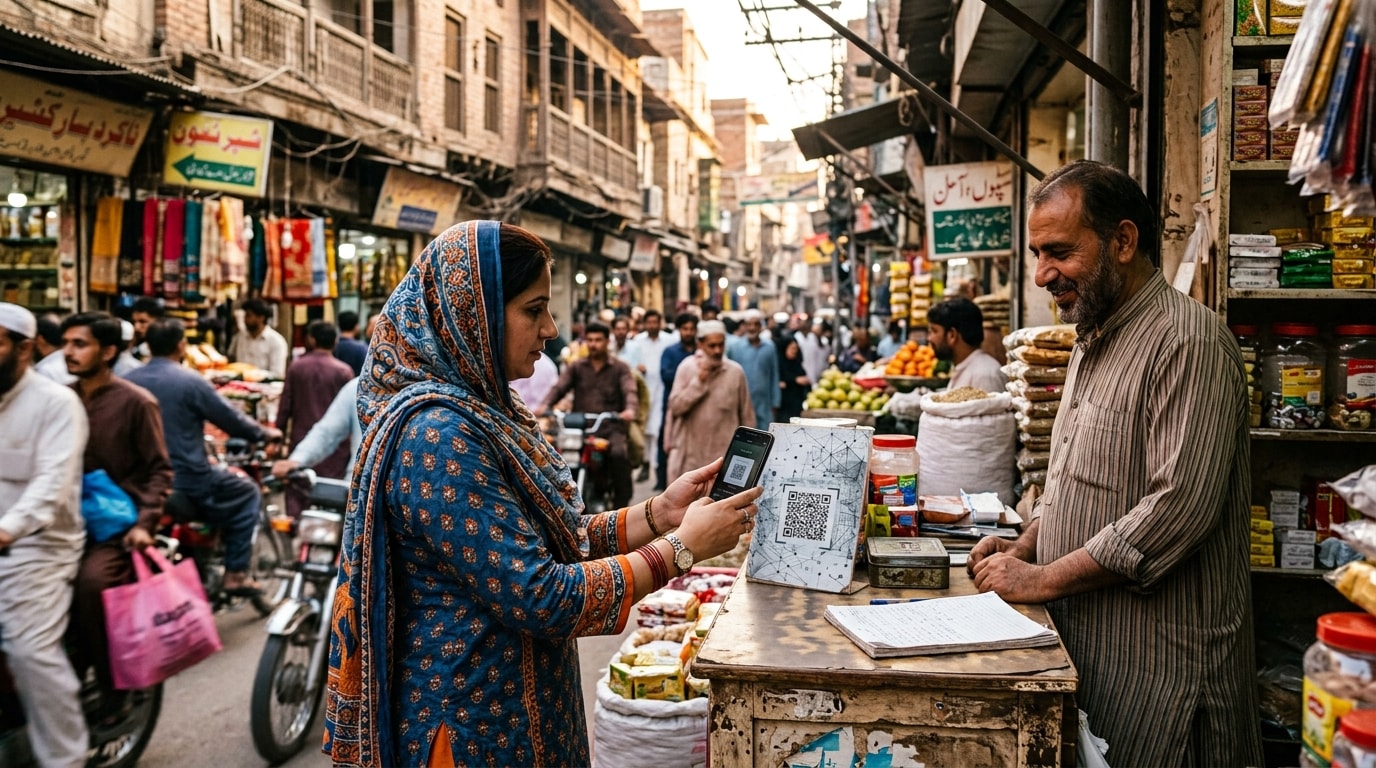
A few years ago, paying at a Pakistani chai dhaba usually meant reaching for your wallet, counting your notes, and hoping you had the right amount of cash.
Today, that same payment can happen in seconds.
Open your banking app or digital wallet. Scan the QR code. Check the payment details. Confirm. Done.
That small square on the counter is changing how customers pay and how businesses collect money.
QR code payments in Pakistan are becoming an increasingly important part of digital commerce, giving customers another way to pay while helping businesses accept digital transactions across retail stores, restaurants, pharmacies, cafes, service businesses, ecommerce checkouts, and other payment points.
But getting paid is only the beginning.
For a business, every payment also needs to connect back to the sale.
What was sold?
How much was the bill?
How did the customer pay?
Was the payment recorded correctly?
Does it match the sale?
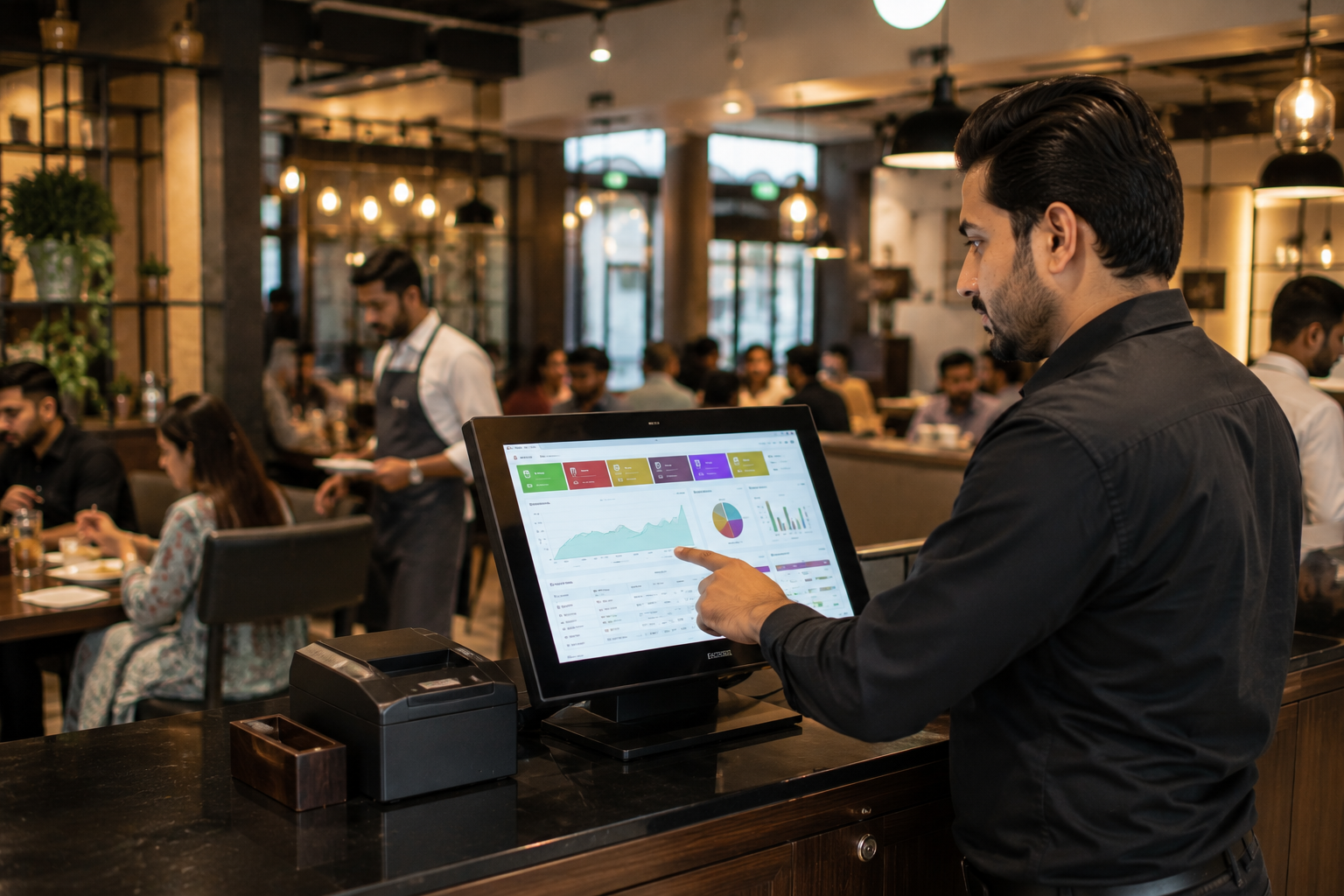
And can the owner see what happened at the end of the day?
That is where QR payment infrastructure and a modern point of sale system such as Oscar come together.
This guide explains what QR code payments are, how QR payments work in Pakistan, how Raast QR and Raast P2M fit into the ecosystem, how businesses can accept QR payments, the difference between static and dynamic QR codes, payment security, fees and limits, and what happens after the customer scans.
Most importantly, it looks at the bigger business picture: how payment acceptance can become part of a more organized sales and operational workflow with Oscar.
What Is a QR Code Payment?
A QR code payment is a digital payment that allows a customer to pay a business by scanning a Quick Response code using a supported banking app, mobile wallet, or payment application.
Instead of manually entering an account number, IBAN, or wallet details, the customer scans the merchant's QR code. The payment application reads the relevant information and presents the transaction for review.
Depending on the QR type, the payment amount may already be included or the customer may need to enter it.
Think of a QR code as a digital address for a payment.
The customer scans it, verifies the payment information, and authorizes the transaction through the relevant application.
For customers, that makes payment simpler.
For businesses, however, the QR code is only the visible part of a much larger transaction.
The QR code makes payment easier. The system behind it determines how effectively that payment can be managed.
How Does the QR Code Payment System in Pakistan Work?
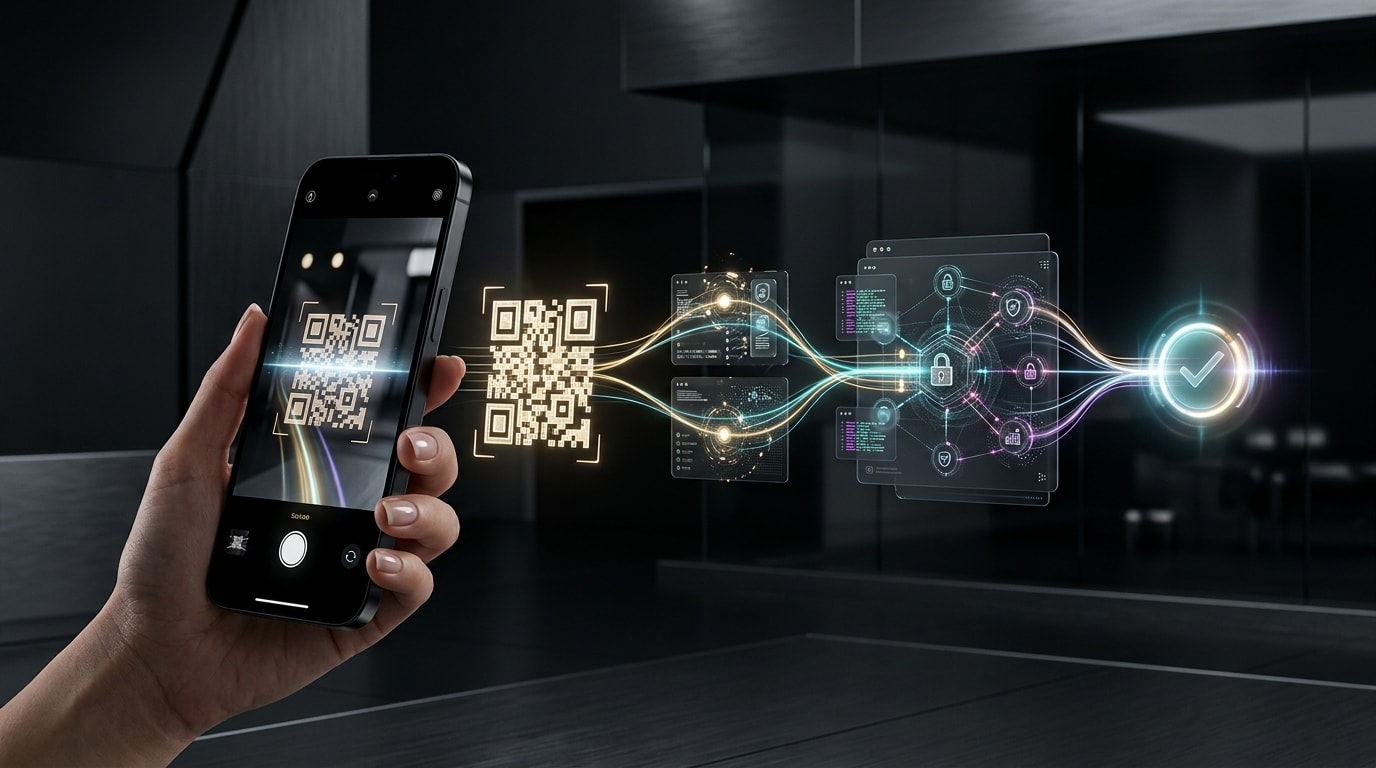
A QR payment can feel almost instant to the customer, but several steps happen behind that simple scan.
- The merchant displays a QR code
- The customer opens a supported banking app or mobile wallet
- The customer scans the merchant QR code
- The application identifies the relevant payment information
- The customer enters or confirms the payment amount
- The customer reviews and authorizes the transaction
- The payment moves through the applicable payment infrastructure
- The customer and merchant receive the relevant transaction confirmation
The exact experience can vary depending on the bank, wallet, payment provider, QR type, and payment infrastructure.
For the customer, the process is simple:
Scan. Verify. Authorize. Confirm.
For the business, however, the transaction does not end with the confirmation.
The business still needs to know what the payment relates to, whether the correct amount was received, and how it fits into the day's sales.
QR Payments in Pakistan and the Digital Payment Ecosystem
QR payments are part of a much larger digital payment ecosystem in Pakistan.
That ecosystem includes banks, mobile wallets, fintech companies, payment service providers, payment gateways, and instant payment infrastructure.
The customer sees a QR code.
Behind that QR code are the systems responsible for identifying the payment destination, authenticating the transaction, processing the payment, and maintaining the relevant records.
The State Bank of Pakistan has established standards for QR based payments covering areas such as interoperability, QR code structure, merchant acceptance, static QR, dynamic QR, and other aspects of the payment ecosystem.
Why Does Interoperability Matter?
If every payment provider operated a completely separate QR system, merchants could end up displaying multiple QR codes for different customers.
An interoperable QR environment aims to make payment acceptance more connected across participating institutions.
Think of it like a universal payment doorway.
Customers can use supported applications while merchants can receive payments through the relevant participating financial institution or payment infrastructure.
For customers, that can mean more flexibility.
For businesses, it can mean fewer barriers to digital payment acceptance.
What Is Raast?
Raast is Pakistan's instant payment system developed by the State Bank of Pakistan.
It was designed to facilitate fast digital payments and connect participating financial institutions through interoperable payment infrastructure.
Raast is particularly relevant to QR payments because of Raast P2M.
What Is Raast P2M?
Raast P2M means Raast Person to Merchant.
It is designed to support digital payment acceptance by businesses and merchants through the Raast infrastructure.
Raast P2M supports payment acceptance methods including QR codes, merchant aliases, IBAN based payments, and Request to Pay.
For merchants, Raast QR provides a way to offer customers a QR based payment experience.
For customers, it can provide a convenient way to pay participating merchants through supported banking and payment applications.
Why Does Raast QR Matter for Businesses?
Without interoperable payment infrastructure, businesses may need to think about which bank or wallet each customer uses.
Interoperability aims to reduce that friction.
Instead of maintaining a completely separate payment experience for every customer, a merchant can offer a more connected QR based payment option across participating institutions.
For businesses, that can make digital payment acceptance more practical.
But there is an important distinction:
Making payment easy to accept is one thing. Making payment easy to manage is another.
The Role of the State Bank of Pakistan in QR Payments
The State Bank of Pakistan plays an important role in establishing standards and frameworks for digital payments in Pakistan.
Its QR payment standards address areas such as interoperability, QR code structure, merchant acceptance, static and dynamic QR codes, and other aspects of the payment ecosystem.
A QR code is only the visible interface.
Behind it are:
- Financial institutions
- Payment networks
- Authentication systems
- Transaction processing
- Settlement
- Record keeping
The customer sees a square.
The merchant sees a payment.
The payment ecosystem sees an entire transaction.
Popular Apps and Banks Used for QR Payments in Pakistan
Customers can access QR payment functionality through different types of financial applications.
The exact QR functionality depends on the relevant application, merchant arrangement, and payment infrastructure.
1. JazzCash QR Payment
JazzCash provides digital payment services that can support QR-based merchant payments.
Where the relevant functionality is available, customers can scan a participating merchant QR code, review the transaction details, and authorize the payment.
2. Easypaisa QR Payments
Easypaisa is another widely recognized mobile wallet in Pakistan and provides QR-based payment functionality for supported merchants and payment use cases.
3. NayaPay and SadaPay QR Payments
Digital wallets such as NayaPay and SadaPay are also part of Pakistan's broader digital payment ecosystem.
Their presence reflects the growing role of mobile applications in everyday financial transactions.
4. Rupin
Rupin enables businesses in Pakistan to accept digital payments through QR codes, IBAN and payment links. It helps businesses collect payments while providing better visibility into transactions, sales, and incoming funds, making digital payment collection easier to manage.
6. Bank App QR Payments
Major Pakistani banks have incorporated digital payment capabilities into their mobile banking applications.
Depending on the bank and supported payment infrastructure, customers may be able to scan and pay directly through their banking application.
That means QR payment does not necessarily require a separate wallet.
How to Pay Using a QR Code in Pakistan
If you are searching for how to pay through QR code in Pakistan, the process is generally straightforward.
- Open your banking app or mobile wallet.
- Select the QR scanning or scan to pay option.
- Scan the merchant QR code.
- Check the merchant information.
- Enter the amount if it is not already provided.
- Review the transaction details.
- Authorize the payment.
- Check the payment confirmation or receipt.
The exact buttons and screens differ between applications.
For people searching in Roman Urdu, terms such as "QR code se payment kaise karein" and "QR code payment kya hai" refer to the same basic process:
Scan the code, verify the information, authorize the transaction, and check the confirmation.
How Can Businesses Accept QR Payments in Pakistan?
Businesses can enable merchant QR payments through participating banks, mobile wallets, payment service providers, or other applicable payment institutions.
The exact requirements depend on the provider. A business may generally need:
- A bank account or eligible mobile wallet.
- CNIC and relevant business information.
- Registration with a provider offering merchant QR services.
- A merchant QR code.
- A process for tracking incoming payments and settlements.
The QR code can then be displayed at:
- Retail counters
- Restaurants and cafes
- Pharmacies and medical stores
- Supermarkets and kiryana stores
- Paan shops
- Service businesses
- Invoices
- Ecommerce checkouts
- Delivery payment points
But there is a critical distinction.
Getting paid and managing the payment are not the same thing.
A business needs to know what was sold, which transaction was paid, how it was paid, how much was received, and whether the payment matches the sale.
Static QR vs Dynamic QR Codes
Two major types of QR codes used for payments are static QR and dynamic QR.
What Is a Static QR Code?
A static QR code generally remains the same across transactions.
A merchant can print it and display it at a fixed payment location. Customers scan the same code and typically enter the payment amount themselves.
This can work well for small shops, vendors, and businesses with straightforward transactions.
Think of a static QR as a permanent sign outside a shop.
What Is a Dynamic QR Code?
A dynamic QR code can be generated for a specific transaction.
Depending on the implementation, the payment amount and other transaction information can be associated with that QR code.
This can make dynamic QR particularly useful for billing, invoices, and transaction specific checkout.
Think of a dynamic QR as a personalized invoice.
Static QR vs Dynamic QR
Both have legitimate use cases.
A small retailer with straightforward transactions may find static QR sufficient, while a business processing larger transaction volumes may benefit from dynamic QR integrated with its billing process.
QR Payments for Shops and Small Businesses
QR payments can be particularly useful for small businesses.
A kiryana store, bakery, pharmacy, restaurant, roadside vendor, salon, or independent service provider can give customers a digital alternative to cash.
The QR code can occupy a small space on the counter while giving customers another way to pay.
But as payment volume grows, the business needs more than payment acceptance.
It needs visibility.
What was sold?
How much was received?
How was it paid?
Which sales remain unpaid?
How much did the business make today?
Do payment records match sales records?
That is where a point of sale system becomes important.
QR Payments, Card Machines, and POS Systems
QR payments, card machines, and POS systems solve different problems.
The distinction is simple.
A QR code can collect the money.
A POS system can help the business understand and manage the transaction.
Think of a mailbox and a filing system.
The mailbox receives the envelope.
The filing system tells you where that envelope belongs and what it relates to.
The same principle applies to payments.
QR Payment Collection for Retail Businesses
Retail businesses often handle multiple payment methods during the same day.
One customer pays cash.
Another pays by card.
Another scans a QR code.
Another uses a mobile wallet.
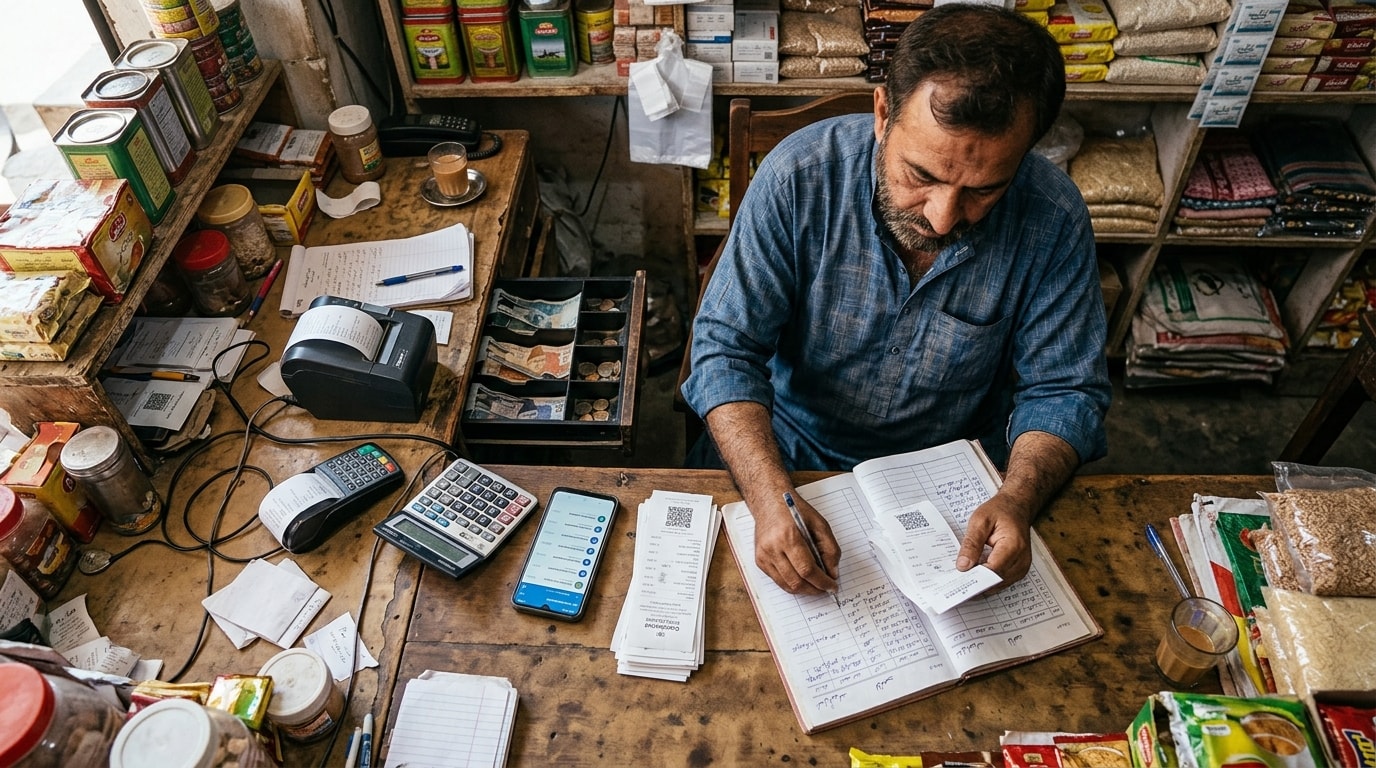
Without a central system, payment information can become scattered across cash drawers, bank notifications, wallet applications, QR records, and handwritten records.
A POS system can provide a central operational layer where sales and payment information can be organized around the underlying transaction.
As transaction volume grows, the challenge is no longer simply accepting payments.
The challenge becomes maintaining visibility.
QR Payments for Restaurants and Cafes
Restaurants and cafes can use QR payments at counters, tables, invoices, or other customer payment points.
For example, a customer receives a bill and scans a QR code to complete payment.
Dynamic QR can be particularly useful when each bill has a different amount.
When QR payments are integrated with billing, the business can move closer to treating the sale and payment as a single transaction rather than two separate events.
The customer gets a convenient way to pay.
The restaurant gets a clearer way to manage the payment against the bill.
QR Payments for Pharmacies and Medical Stores
Pharmacies and medical stores process frequent transactions involving different products and payment amounts.
QR payments give customers another digital payment option.
For the business, however, payment acceptance is only one part of the operation.
The business also needs accurate billing, transaction records, inventory visibility, and a clear understanding of daily sales.
That is why QR payment acceptance can be more valuable when it operates alongside a broader point of sale workflow.
QR Payments for Service Businesses
QR payments can also work for salons, repair businesses, consultants, education providers, and other customer facing businesses.
A merchant can use a QR code at the point of payment or include QR payment information with an invoice or payment request where supported.
The principle remains the same:
The customer needs a convenient way to pay. The business needs a reliable way to record and manage the transaction.
QR Payments for Ecommerce and Invoices
QR payments are not limited to physical counters.
Businesses can also use QR-based payment experiences in invoices, payment requests, and ecommerce environments where supported.
For customers, the experience remains simple.
Scan. Review. Authorize.
For businesses, the bigger value comes when the payment can be connected with the underlying order or invoice.
That reduces the gap between:
"The customer paid."
and
"The business knows exactly which transaction was paid."
Benefits of QR Payments for Businesses
1. More Payment Choices
Customers have different payment preferences.
Some prefer cash. Others prefer cards, banking apps, mobile wallets, or QR payments.
QR acceptance gives customers another digital payment option.
2. Convenient Checkout
Customers can scan, verify, and authorize a payment through a supported application.
This can reduce some of the friction associated with cash or manually entering account details.
3. Less Dependence on Physical Cash
Businesses can accept digital payments without requiring every transaction to involve physical notes and coins.
This can reduce some of the operational work associated with cash handling.
4. Digital Transaction Records
Digital transactions generate electronic records that can support payment tracking and reconciliation.
5. Useful for Small Businesses
QR codes can provide a relatively simple way for small businesses to start accepting digital payments.
6. Potentially Easier Reconciliation
When payment information is connected with billing and sales records, businesses can reduce some of the manual work involved in matching payments to transactions.
That is where the difference between a payment tool and an integrated business system becomes important.
QR Payment Security in Pakistan
A QR code itself does not determine whether a payment is secure.
Security depends on the underlying payment infrastructure, application, authentication controls, financial institution, and customer behavior.
Customers should:
- Check the merchant name before confirming.
- Verify the payment amount.
- Use the official banking or payment application.
- Avoid suspicious QR codes.
- Never share passwords, PINs, or authentication codes.
- Check the transaction confirmation after payment.
- Contact the relevant financial institution if something appears incorrect.
Common QR Code Scams
Potential risks include:
- Fake QR stickers placed over legitimate merchant QR codes.
- Fraudulent QR codes presented as a way to receive money.
- QR codes leading to fraudulent websites or login pages.
- Social engineering designed to convince customers to authorize an unexpected payment.
A fake QR sticker is like replacing a shop's signboard with someone else's address.
Always verify the merchant information displayed by your payment application before authorizing a payment.
Customers should also be cautious if someone claims they need to scan a QR code simply to receive money. If the application is asking you to authorize a payment, stop and verify what is happening.
QR Payment Charges in Pakistan
QR payment fees can vary depending on the payment method, provider, merchant arrangement, and applicable payment infrastructure.
Customers may encounter little or no direct charge for certain digital payment transactions, while merchants may be subject to merchant service fees or a Merchant Discount Rate, depending on the provider and arrangement.
What Is MDR?
MDR stands for Merchant Discount Rate.
It refers to a fee associated with accepting certain digital payments.
The applicable rate can vary depending on the payment method, provider, merchant arrangement, and current terms.
Businesses should check the latest commercial terms directly with their bank, wallet, or payment provider rather than assuming every QR service has the same fee structure.
QR Payment Limits in Pakistan
QR payment limits can depend on the relevant account, wallet, verification level, provider, and payment infrastructure.
Basic accounts can have different limits from fully verified accounts.
Customers and businesses should check the applicable limits with their bank or payment provider, particularly when handling high value transactions.
QR Payment vs Cash Payment
QR payments do not necessarily need to replace cash.
They can simply provide another payment channel.
The practical question for a business is not always:
"Cash or QR?"
It can be:
"How can the business manage both effectively?"
QR Payment vs Card Payment
A card payment generally involves a physical or virtual card and, in physical retail environments, commonly uses a card acceptance terminal.
A QR payment can allow the customer to use a smartphone and supported payment application.
Businesses may choose to support both because customers do not all use the same payment method.
QR Payment vs Bank Transfer
Traditional bank transfers can require customers to select or enter account information.
A QR payment can simplify the customer interaction by presenting relevant payment information through a scannable code.
The underlying movement of funds still depends on the relevant payment infrastructure.
The QR code simply makes the customer side of the transaction more convenient.
QR Payment vs Mobile Wallet
A mobile wallet is an application or financial service that can store or facilitate digital payments.
A QR code is a payment interface.
In simple terms:
The wallet is the tool.
The QR code is the doorway.
A customer can use a mobile wallet to scan a merchant QR code.
The two therefore work together rather than necessarily competing with each other.
Why QR Payment Interoperability Matters
If every provider operated a completely separate QR system, a merchant could end up displaying several different codes.
An interoperable QR framework aims to make the payment experience more connected across participating institutions.
For customers, this can mean greater flexibility in the applications they can use.
For merchants, it can mean fewer payment acceptance barriers.
For the wider digital payment ecosystem, it can support broader adoption.
The Future of QR Payments in Pakistan
QR payments are part of a broader movement toward digital financial services in Pakistan.
Mobile banking, digital wallets, instant payments, merchant QR, payment gateways, ecommerce payments, and point of sale systems are increasingly connected parts of the same financial environment.
As more customers become comfortable with digital payments and more merchants accept them, QR codes can become an increasingly familiar part of everyday commerce.
But the opportunity goes beyond replacing cash.
Businesses are also generating more digital transaction data.
That data can help businesses understand sales, payments, inventory, customer behavior, reconciliation, and overall performance.
The real opportunity is not simply replacing one cash transaction with one QR transaction.
It is turning each transaction into usable business information.
Why a QR Code Alone Is Not Enough for a Growing Business
A QR code answers one question:
"How can the customer pay?"
A growing business needs answers to several others:
What did the customer buy?
How much was the bill?
Has the payment been recorded?
Which payment method was used?
How much did the business sell today?
How much inventory remains?
Which transactions need attention?
How is the business performing?
That is why payment acceptance and business management are not the same problem.
A QR code helps the customer pay.
A POS system helps the business manage what happened.
As transaction volumes grow, businesses need more than payment confirmation.
They need visibility.
How Oscar Fits Into QR Code Payments in Pakistan
Oscar is a point of sale solution designed to help Pakistani businesses manage their sales and daily operations.
For businesses accepting cash, cards, QR payments, or other digital payment methods, Oscar provides a central operational layer around the sale.
Imagine a restaurant where one customer pays cash, another pays by card, and another scans a QR code.
The customers have completed their payments.
The business still needs to know what each payment relates to.
Without a connected system, the owner may need to look at different payment notifications and manually match them with bills.
With a point of sale workflow, the business can keep the sale, billing information, and payment record organized around the transaction.
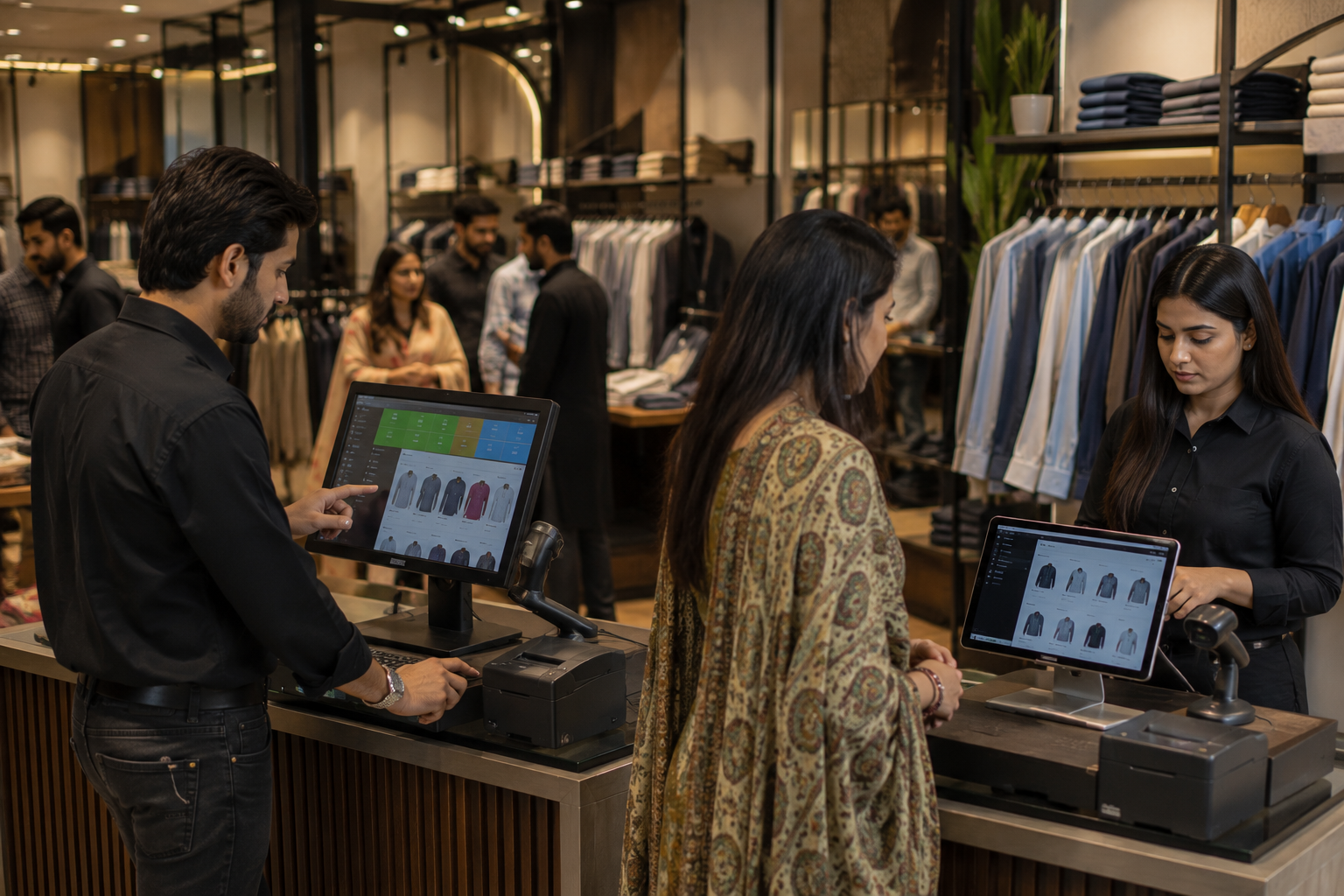
Oscar for Retail Businesses
Oscar can bring sales and payment activity into a more organized workflow for businesses such as:
- Kiryana stores
- Pharmacies
- Medical stores
- Restaurants
- Cafes
- Bakeries
- Paan shops
- Clothing stores
- Electronics stores
- Supermarkets
- Other customer-facing businesses
The objective is not simply to accept more payment methods.
It is to maintain visibility over the transactions those payment methods create.
Oscar and QR Payment Management
As QR payment activity grows, businesses can receive payments through several channels.
The challenge becomes keeping those payments connected to sales.
Oscar can help businesses maintain that connection by bringing billing, sales records, and business reporting into one system.
The bigger idea is simple:
QR payments make it easier for customers to pay.
Oscar helps businesses manage the sales and operational activity surrounding those payments.
Ready to See How Oscar Works?
QR payments can make it easier for customers to pay.
But for a business, the payment is only the beginning.
The real question is what happens after the customer scans.
Does the sale get recorded?
Can the business see how it was paid?
Can the owner understand daily sales?
Can payment information be managed alongside the rest of the business?
That is where Oscar fits.
For businesses moving from cash based operations toward a more digital payment environment, Oscar provides a way to bring the payment experience into a broader point of sale workflow.
See Oscar in Action
Book an Oscar demo and discover how a modern point of sale system can bring sales, billing, payments, and business visibility into one organized workflow.
FAQs
1. What is QR code payment in Pakistan?
QR code payment is a digital payment method where a customer scans a merchant QR code using a supported banking app, mobile wallet, or payment application and authorizes the transaction.
2. How does QR payment work in Pakistan?
The customer scans the merchant QR code, reviews the payment information, enters or confirms the amount, authorizes the transaction, and receives payment confirmation.
3. How can someone pay through a QR code in Pakistan?
Open a supported banking app or mobile wallet, select the QR scanning option, scan the merchant code, verify the payment information, authorize the transaction, and check the confirmation.
4. What is Raast QR?
Raast QR is a QR based payment method connected with Raast, Pakistan's instant payment infrastructure. It allows participating merchants to accept digital payments through supported payment applications.
5. What is Raast P2M?
Raast P2M means Raast Person to Merchant. It is designed to support digital payment acceptance by businesses and merchants through the Raast infrastructure.
6. Which apps support QR payments in Pakistan?
QR payment functionality is available through different banking applications, mobile wallets, and digital payment applications. Examples include JazzCash, Easypaisa, NayaPay, SadaPay, and mobile banking applications offered by Pakistani banks. The exact functionality depends on the application and payment infrastructure.
7. How can a business accept QR payments in Pakistan?
A business can approach a participating bank, mobile wallet, or payment service provider offering merchant QR services. Requirements depend on the provider and may include an eligible account, CNIC and business information, registration, a merchant QR code, and a process for tracking payments and settlements.
8. What is a static QR code?
A static QR code is generally reusable. The merchant displays the same QR code for multiple transactions, and the customer typically enters the payment amount.
9. What is a dynamic QR code?
A dynamic QR code can be generated for a specific transaction and can contain transaction specific information, including the payment amount where supported.
10. What is the difference between static and dynamic QR?
A static QR can be reused for multiple payments, while a dynamic QR can be generated for a specific transaction. Static QR can suit simple payment collection, while dynamic QR can provide greater transaction level specificity.
11. Are QR payments safe in Pakistan?
QR payments use digital payment infrastructure and transaction authentication, but customers should verify the merchant name and payment amount before authorizing a transaction. They should also avoid suspicious QR codes and never share authentication credentials.
12. What are the common QR payment scams?
Common risks include fake QR stickers, fraudulent QR codes presented as a way to receive money, QR codes leading to fraudulent websites, and social engineering designed to convince customers to authorize unexpected payments.
13. Are QR payments free in Pakistan?
There is no single fee structure covering every QR payment service. Customer charges and merchant fees depend on the relevant provider, payment infrastructure, account, and commercial arrangement.
14. What is MDR in QR payments?
MDR means Merchant Discount Rate. It refers to a fee associated with accepting certain digital payments. The applicable rate depends on the payment provider, payment method, merchant arrangement, and current terms.
15. What are QR payment limits in Pakistan?
QR payment limits can vary according to account type, verification level, financial institution, wallet, provider, and payment infrastructure. Customers and merchants should check the applicable limits with their provider.
16. Can QR payments replace cash?
QR payments can provide an alternative to cash, but they do not necessarily replace cash for every customer or business. Businesses can use cash, cards, QR payments, and other payment methods together.
17. What is the difference between QR payments and card payments?
QR payments generally allow customers to use a smartphone and supported payment application, while card payments typically use a debit or credit card and, for physical transactions, a card acceptance terminal.
18. What is the difference between QR payments and bank transfers?
A bank transfer generally requires the customer to select or enter payment information, while a QR payment can present relevant payment information through a scannable code.
19. Can small businesses use QR payments?
Yes. QR payments can be used by small retailers, restaurants, pharmacies, service providers, vendors, and other businesses that want to offer customers a digital payment option.
20. Can pharmacies and medical stores accept QR payments?
Yes. Pharmacies and medical stores can use merchant QR solutions to give customers another way to pay. Connecting QR payment acceptance with a POS system can also help organize billing and sales records.
22. Can QR payments be used for ecommerce?
Yes. QR based payment experiences can be used in supported ecommerce, invoice, and payment request environments. The implementation depends on the merchant's payment provider and technology setup.