Best Restaurant Management Systems in Pakistan (Features, Pricing & What to Choose)
May 7, 2026
.Blog
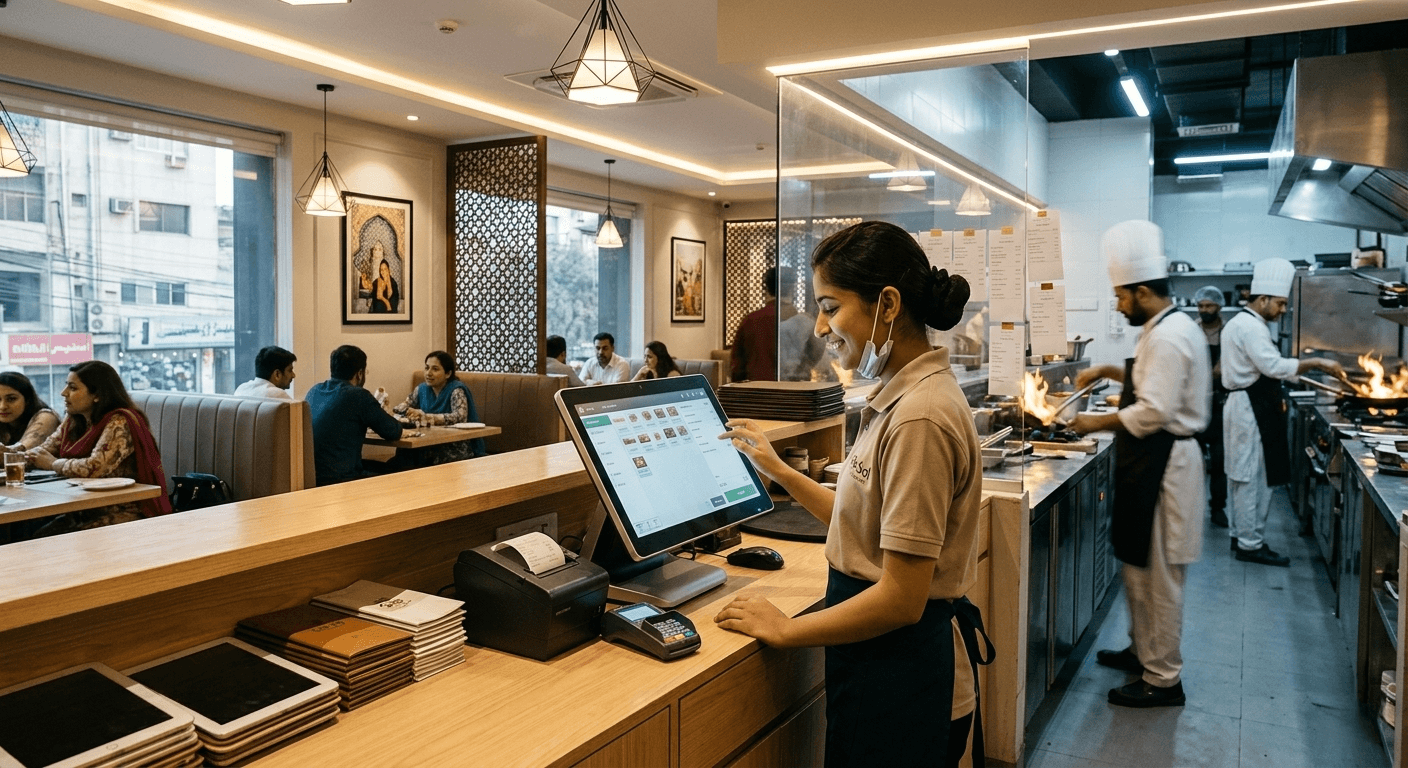
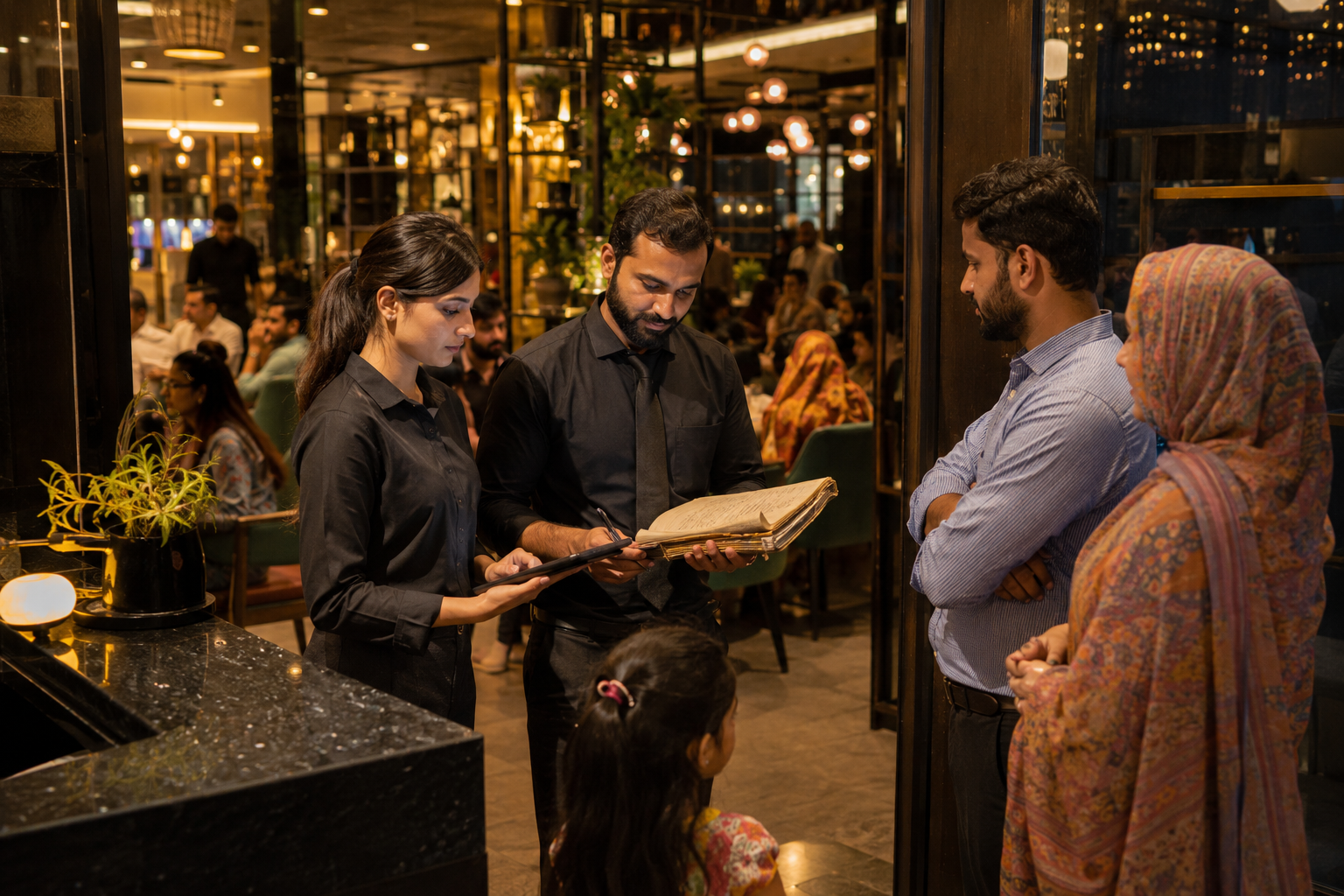
Running a restaurant in Pakistan has become far more complex than simply serving good food. Restaurant owners today have to manage dine-in operations, delivery platforms, kitchen coordination, inventory, staff performance, billing, customer experience, and multi-branch reporting all at the same time.
Whether it is a café in Karachi, a fast food outlet in Lahore, a cloud kitchen in Islamabad, or a multi-branch restaurant chain operating nationwide, operational mistakes can quickly impact profits. Manual billing, stock leakage, delayed kitchen communication, and disconnected systems often slow down growth.
This is why restaurant management systems have become essential for modern food businesses.
The right restaurant management software helps businesses streamline billing, manage inventory, improve kitchen workflows, track sales in real time, and handle both online and offline orders from one place.
This guide explores the best restaurant management systems in Pakistan, their features, pricing considerations, and what restaurant owners should look for before choosing a solution.
What Is a Restaurant Management System?
A restaurant management system is software designed to help restaurants automate and manage daily operations. It combines multiple functions into one platform, including:
- Restaurant POS system
- Billing and invoicing
- Table management
- Kitchen order management
- Inventory tracking
- Employee management
- Sales reporting
- Online order management
- Delivery coordination
- Multi-branch monitoring
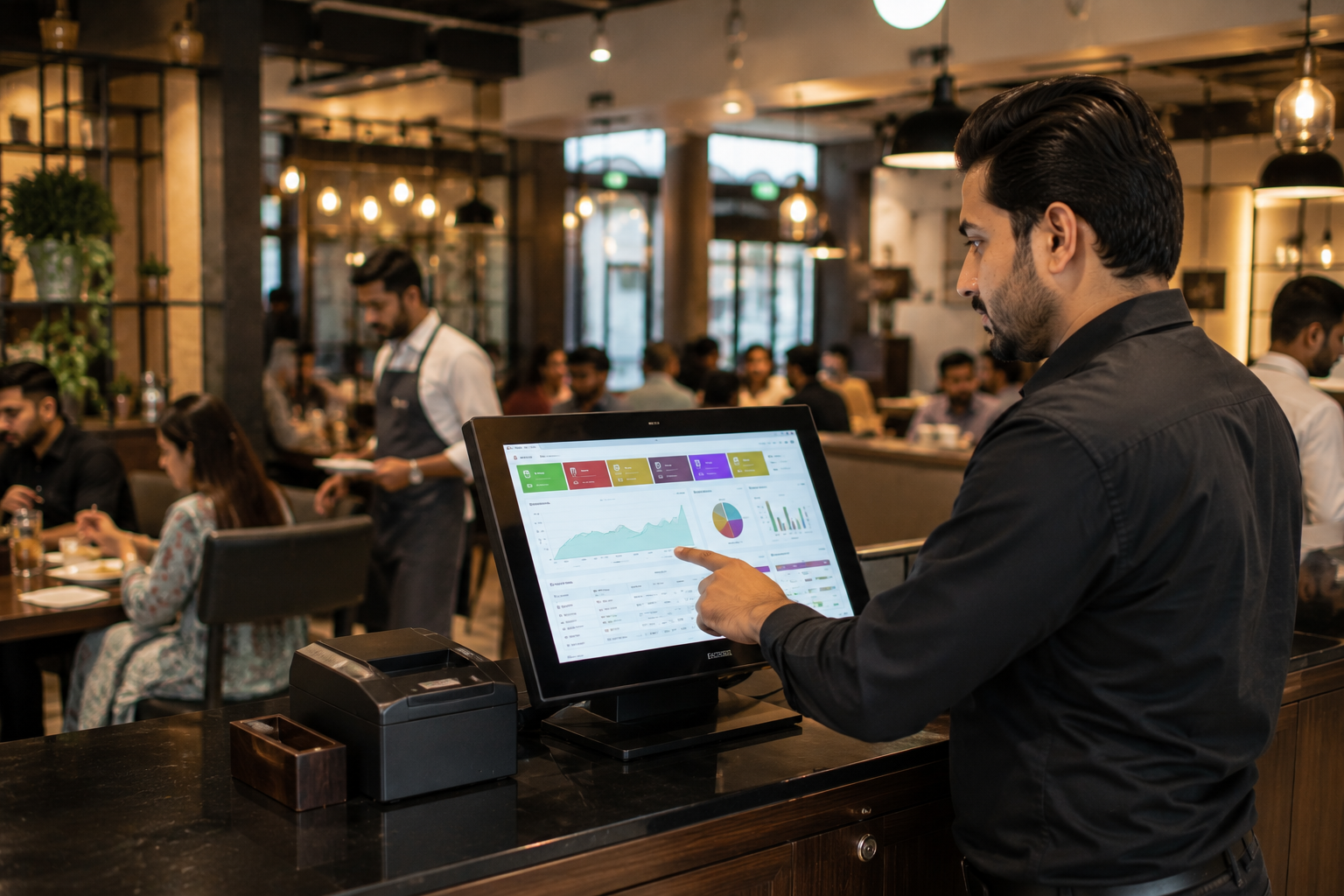
Modern restaurant management software allows owners to manage their entire business through a centralized dashboard instead of relying on separate tools or manual processes.
Why Restaurants in Pakistan Are Switching to Restaurant Management Software
The restaurant industry in Pakistan has evolved rapidly over the last few years. Food delivery platforms, rising operational costs, customer expectations, and competition have pushed restaurants toward automation.
Restaurants that still rely on manual operations often struggle with:
- Slow billing processes
- Inventory wastage
- Missing stock records
- Kitchen communication delays
- Human errors in orders
- Cash handling issues
- Limited reporting visibility
- Difficulty managing multiple branches
- Delivery order confusion
- Lack of business insights
A cloud-based restaurant management system solves these operational bottlenecks while helping restaurant owners scale more efficiently.
Features to Look for in the Best Restaurant Management System
Not every restaurant software offers the same capabilities. Some only focus on billing, while others provide complete restaurant automation.
Here are the most important features restaurant owners should prioritize.
1. Restaurant POS System
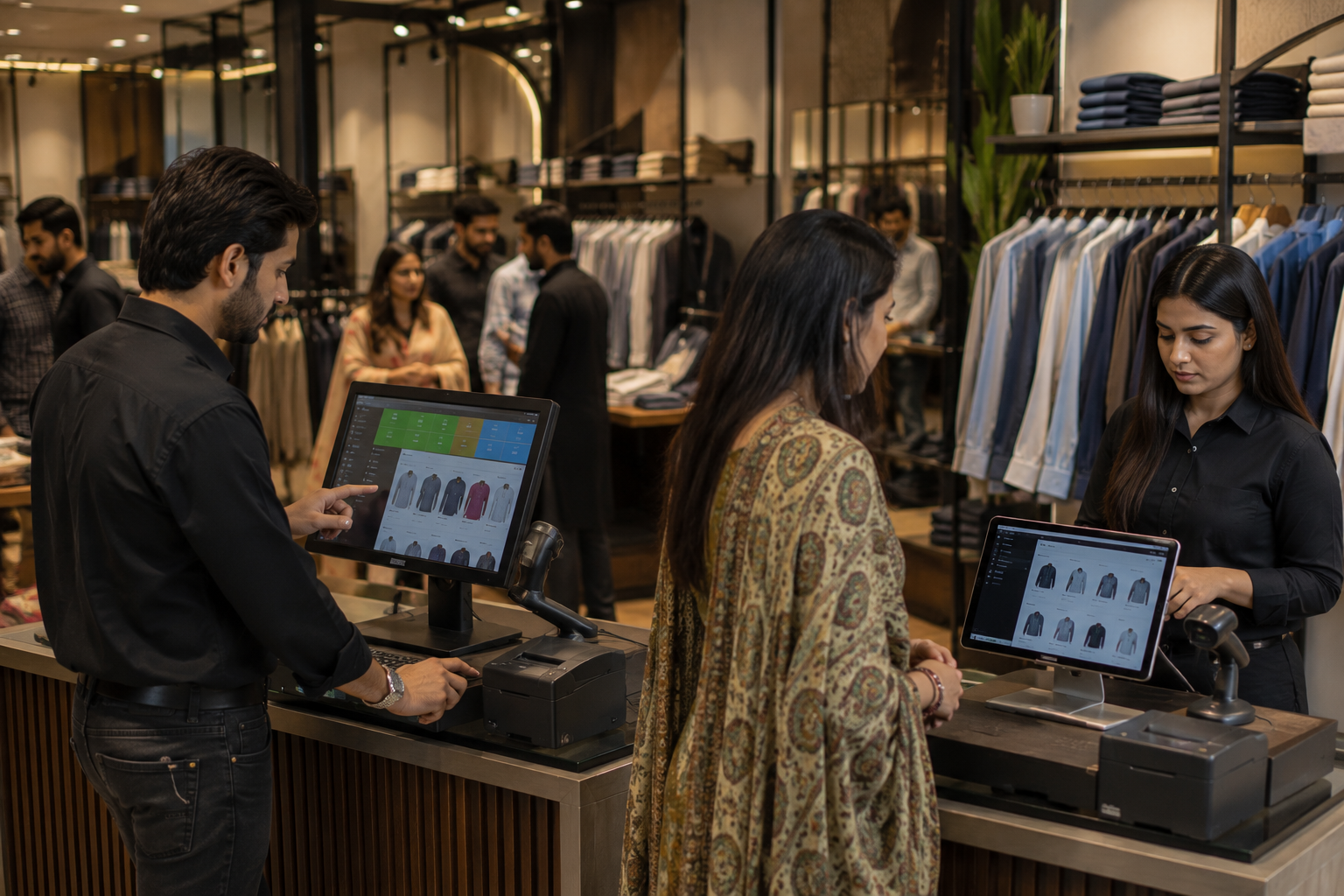
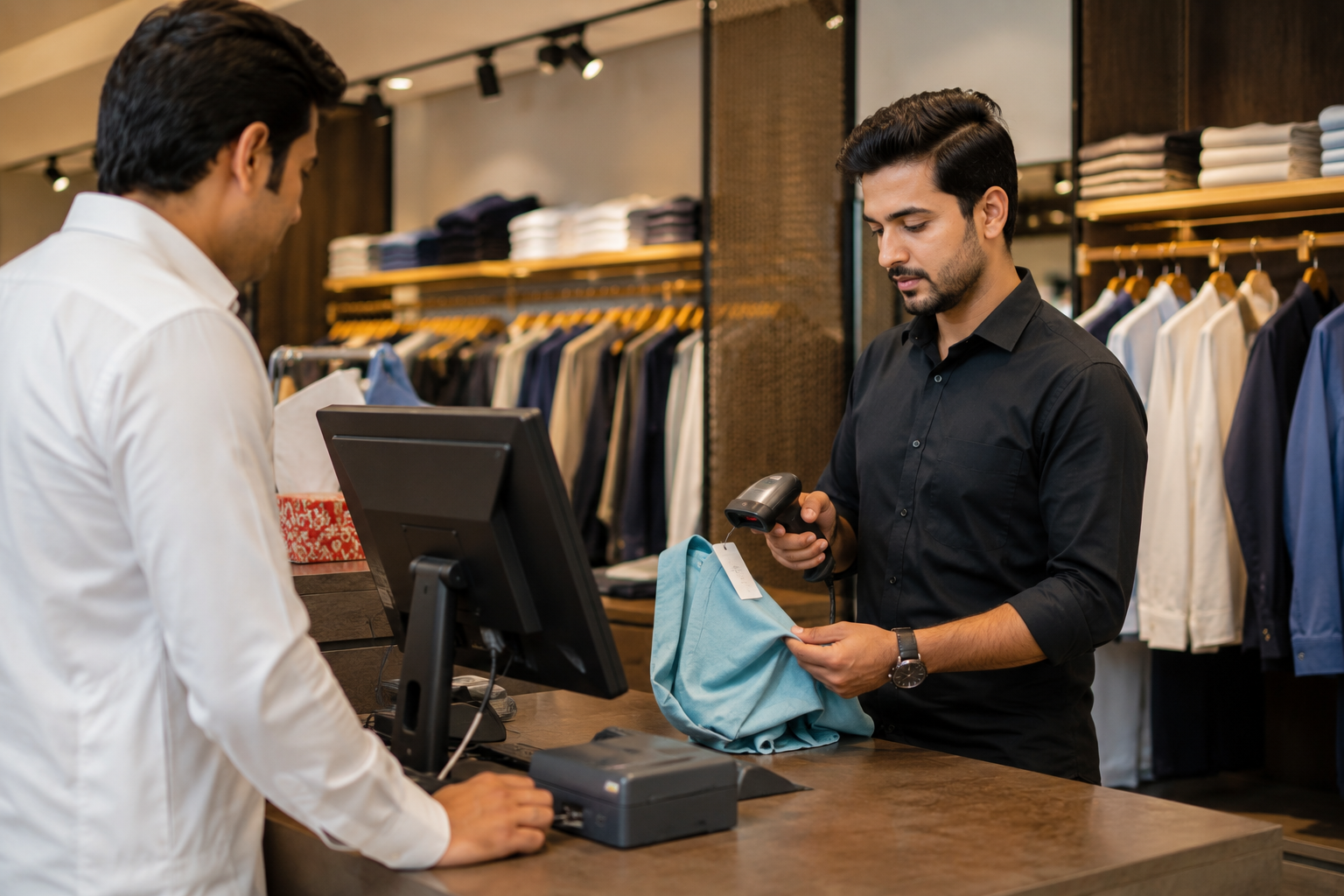
A restaurant's POS software is the core of daily operations. It handles billing, order taking, cashier operations, and payment processing.
A good restaurant POS system should offer:
- Fast billing
- Touchscreen support
- Barcode integration
- Split billing
- Discount management
- Tax calculations
- Offline functionality
- Multiple payment methods
For restaurants in Pakistan, offline billing support is particularly important because internet disruptions can affect operations.
2. Inventory Management
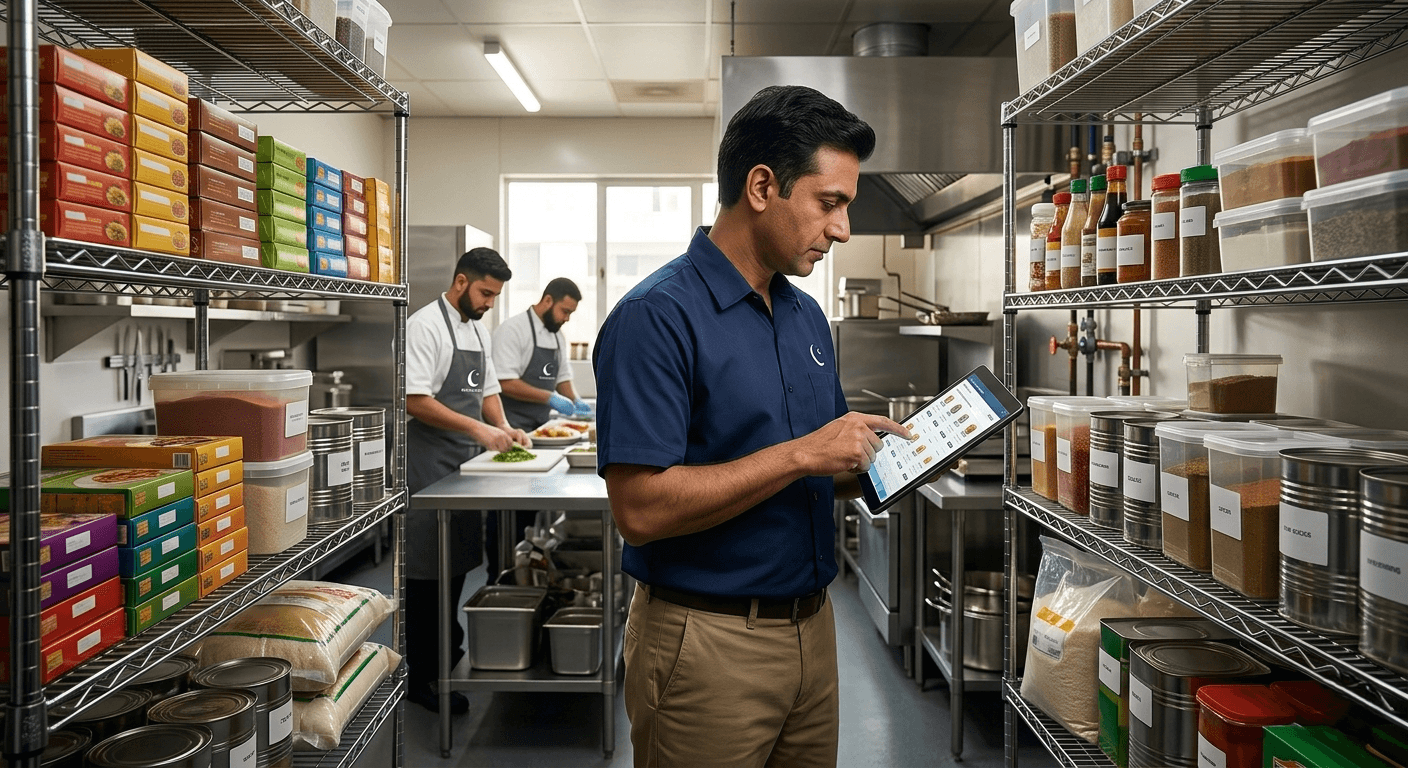
Inventory management software for restaurants helps track ingredients, raw materials, and stock consumption in real time.
Key inventory features include:
- Ingredient tracking
- Recipe level inventory deduction
- Low stock alerts
- Vendor management
- Purchase management
- Wastage tracking
- Expiry management
Restaurants lose significant revenue through inventory leakage and food wastage. A restaurant inventory management system helps reduce those losses.
3. Kitchen Order Ticket System
A KOT system improves coordination between front desk staff and kitchen teams.
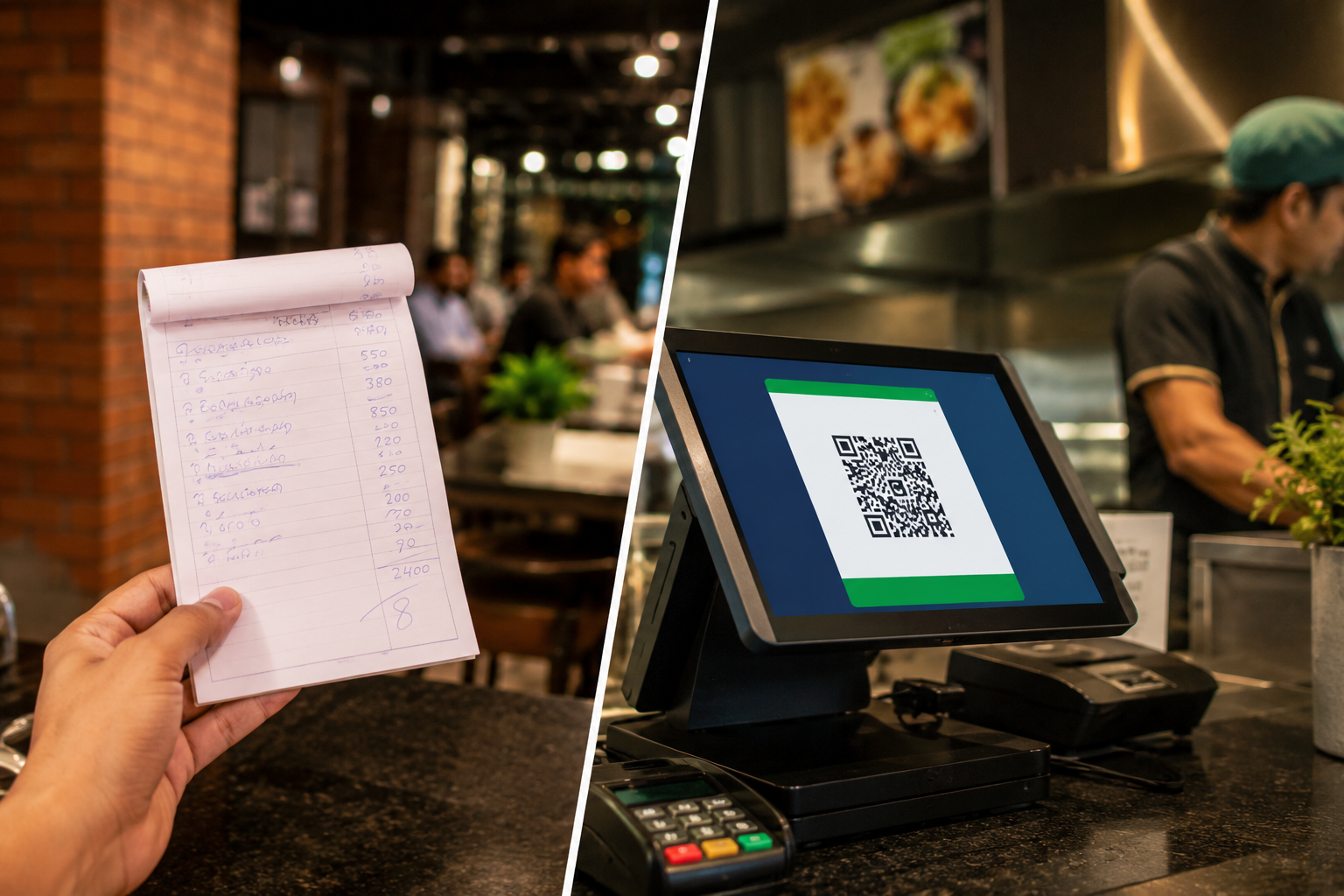
Instead of handwritten slips, kitchen orders are automatically sent to the kitchen display or printer. This reduces mistakes and speeds up order preparation.
4. Table Management
For dine-in restaurants, table management software improves customer flow and seating efficiency.
Features often include:
- Table reservations
- Occupancy tracking
- Waitlist handling
- Table-wise billing
- Order transfers
5. Online Order & Delivery Management
Restaurants today receive orders from multiple channels, including:
- Walk-in customers
- Food delivery apps
- Social media
- Direct website orders
A restaurant order management system centralizes all orders into one dashboard to avoid confusion and missed deliveries.
6. Multi-Branch Management
Multi-branch restaurant software allows restaurant owners to monitor all locations from a single dashboard.
This is especially useful for:
- Restaurant chains
- Franchise businesses
- Cloud kitchens
- Expanding food brands
Owners can track branch-wise sales, inventory, staff performance, and profitability in real time.
7. Reporting & Analytics
Restaurant analytics help owners make better decisions based on actual business performance.
Useful reports include:
- Daily sales reports
- Top-selling items
- Profit margin analysis
- Expense tracking
- Staff performance
- Inventory consumption
- Peak hour reporting
Best Restaurant Management Systems in Pakistan
Oscar POS
Oscar POS is one of the growing restaurant management systems in Pakistan, designed for restaurants, cafés, cloud kitchens, bakeries, and multi-branch food businesses.
It combines restaurant POS software, inventory management, billing, sales tracking, and operational reporting into one platform.
Key features include:
- Cloud-based restaurant POS
- Fast billing software
- Inventory and stock management
- Multi-branch reporting
- Kitchen order management
- Delivery order handling
- Online and offline sales management
- Real-time analytics
- Employee access control
- Customer management
One of the biggest advantages of Oscar POS is its ability to unify restaurant operations instead of forcing businesses to use multiple disconnected systems.
Restaurants managing dine-in customers alongside delivery platforms can particularly benefit from centralized order handling and inventory visibility.
Oscar also aligns well with businesses looking for scalable restaurant software in Pakistan because it supports growth from single outlet operations to multi-branch expansion.
Other Restaurant Management Systems in Pakistan
Several restaurant POS systems and restaurant ERP solutions are available in the market, each with different strengths.
Some focus primarily on billing while others specialize in cloud kitchen operations or enterprise restaurant management.
Restaurant owners should compare systems based on:
- Restaurant size
- Operational complexity
- Number of branches
- Inventory requirements
- Delivery management needs
- Budget
- Local support availability
Restaurant Management Software Pricing in Pakistan
Restaurant POS pricing in Pakistan varies depending on features, branches, and deployment models.
Most software providers follow one of these pricing structures:
1. Monthly Subscription Model
Cloud-based restaurant management systems often charge monthly or yearly subscription fees.
Suitable for:
- Small restaurants
- Cafés
- Startups
- Growing businesses
2. One-Time License Model
Some traditional restaurant billing software providers charge a one-time setup fee.
Suitable for:
- Businesses preferring fixed ownership costs
However, these systems may lack cloud access and automatic updates.
3. Enterprise Pricing
Large restaurant chains and franchises often require customized solutions with advanced integrations and multi-branch infrastructure.
Pricing usually depends on:
- Number of terminals
- Branches
- Users
- Customization requirements
- Reporting needs
Hidden Costs Restaurant Owners Should Know
Many restaurants only compare software subscription fees while ignoring additional operational costs.
Important factors include:
- POS hardware costs
- Thermal printers
- Barcode scanners
- Setup charges
- Training fees
- Branch expansion fees
- Technical support costs
- Software upgrade charges
Understanding the complete cost structure helps businesses avoid future surprises.
How to Choose the Right Restaurant Management Software
Small Restaurants & Cafés
Smaller businesses usually need:
- Fast billing
- Simple inventory management
- Expense tracking
- Basic sales reporting
A lightweight cloud POS system is often sufficient.
Fast Food & Quick Service Restaurants
Fast-paced environments require:
- Quick billing
- Kitchen display systems
- Delivery integrations
- Queue management
- High volume order handling
Cloud Kitchens
Cloud kitchens should prioritize:
- Delivery order management
- Multi-platform order syncing
- Inventory tracking
- Kitchen coordination
- Centralized reporting
Fine Dining Restaurants
Fine dining operations benefit from:
- Table reservations
- CRM features
- Advanced table management
- Customer history tracking
- Detailed service workflows
Multi-Branch Restaurant Chains
Chains and franchises need:
- Centralized dashboards
- Branch-wise analytics
- Inventory synchronization
- Employee management
- Unified reporting
Common Mistakes Restaurants Make When Choosing Software
1. Choosing Billing Without Inventory
Many restaurants buy basic billing software and later realize they still cannot track inventory properly.
2. Ignoring Offline Functionality
Internet outages can disrupt restaurant operations. Offline billing support is critical.
3. Buying Software Without Local Support
Technical issues during busy hours can hurt customer experience. Responsive local support matters.
4. Using Separate Systems for Orders and Inventory
Disconnected systems create reporting inconsistencies and operational confusion.
5. Not Planning for Future Growth
A small restaurant may eventually expand into multiple branches. Choosing scalable software early prevents costly migrations later.
Why Cloud-Based Restaurant Management Systems Are Growing
Cloud-based restaurant POS systems have become increasingly popular because they allow owners to manage operations remotely.
Benefits include:
- Real-time sales tracking
- Remote access
- Automatic backups
- Easier software updates
- Multi-branch visibility
- Mobile reporting
Owners no longer need to physically visit every branch to understand business performance.
How Restaurant Management Software Improves Profitability
The right restaurant software does more than simplify operations. It directly impacts profitability.
Benefits include:
- Faster order processing
- Reduced food wastage
- Better inventory control
- Lower operational errors
- Improved customer experience
- Better staff accountability
- Higher table turnover
- Smarter purchasing decisions
Restaurants that automate operations often gain stronger visibility into costs and performance, which helps improve margins over time.
Why Oscar POS Fits Modern Restaurants in Pakistan
Modern restaurants need more than just billing software. They need a centralized system that connects inventory, sales, kitchen operations, reporting, and delivery management.
Oscar POS aligns well with these needs by helping restaurants:
- Manage dine-in and online orders together
- Track inventory in real time
- Monitor multiple branches
- Improve billing speed
- Access business reports remotely
- Reduce operational inefficiencies
- Scale operations more efficiently
For restaurants looking to modernize operations without relying on disconnected tools, a unified restaurant management platform can significantly improve operational control.
FAQs
1. What is the best restaurant management system in Pakistan?
The best restaurant management software depends on business size, operational complexity, and required features. Restaurants should evaluate inventory management, billing, reporting, multi-branch support, and delivery integrations before choosing a system.
2. How much does restaurant POS software cost in Pakistan?
Restaurant POS pricing in Pakistan varies based on features, branches, users, and deployment type. Cloud-based systems usually follow monthly subscription models, while traditional software may charge one-time license fees.
3. What features should a restaurant POS system have?
A restaurant POS system should include billing, inventory management, kitchen order management, reporting, customer management, and multi-payment support.
4. Is cloud-based restaurant software better?
Cloud-based restaurant management systems offer remote access, automatic backups, real-time reporting, and easier multi-branch management, making them suitable for growing businesses.
5. Can restaurant software manage delivery orders?
Yes. Modern restaurant order management systems can centralize dine-in, takeaway, and online delivery orders into one dashboard.
6. Why is inventory management important for restaurants?
Restaurant inventory management helps reduce food wastage, track ingredient usage, improve purchasing decisions, and control operational costs.
7. What is KOT in restaurant billing?
KOT stands for Kitchen Order Ticket. It automatically sends customer orders from the billing counter to the kitchen, improving accuracy and speed.
8. Can small restaurants benefit from restaurant management software?
Yes. Even small restaurants can improve billing speed, inventory visibility, and operational efficiency through restaurant POS software.
9. Does restaurant software work offline?
Many modern restaurant POS systems offer offline functionality so businesses can continue billing during internet outages.
10. Which restaurant software is suitable for multi-branch operations?
Multi-branch restaurant management systems with centralized reporting, inventory synchronization, and remote monitoring are ideal for restaurant chains and franchises.
Final Thoughts
The restaurant industry in Pakistan is becoming increasingly competitive, and operational efficiency now plays a major role in profitability and customer satisfaction.
The right restaurant management system can help restaurants automate billing, improve inventory control, manage online orders efficiently, and gain real-time visibility into business performance.
Instead of choosing software based only on price, restaurant owners should focus on operational fit, scalability, inventory management capabilities, and long-term business growth.
For businesses looking to streamline restaurant operations through a centralized cloud-based platform, exploring a live demo can help clarify what features actually matter in day-to-day operations.
Oscar POS offers restaurants the opportunity to experience how integrated billing, inventory management, reporting, and order handling work together before making a long-term commitment. Trying a demo first can help restaurant owners understand how the right system can simplify operations and support business growth.