How to Manage Multiple Restaurant Branches with One POS
June 22, 2026
.Blog

Running a successful restaurant is challenging enough. Managing multiple restaurant branches adds another layer of complexity that can quickly overwhelm owners and managers. As a restaurant business grows, maintaining consistency, controlling inventory, monitoring sales, and managing staff across different locations becomes increasingly difficult.
Many restaurant chains start by operating each branch independently. While this may work initially, it often creates reporting gaps, inventory issues, and operational inefficiencies that make sustained growth harder.
This is where a restaurant management system connected to a centralized POS can transform operations. With the right technology, restaurant owners can manage multiple branches from a single platform while maintaining visibility and control across every location.
Why Managing Multiple Restaurant Branches Becomes Difficult
As the number of locations grows, so does the amount of data, staff, inventory, and customer activity that must be monitored daily.
Without a centralized restaurant management system, operators often face challenges such as:
- Inconsistent sales reporting
- Inventory discrepancies between branches
- Limited visibility into branch performance
- Difficulty managing employees across locations
- Delayed decision-making due to manual reporting
- Inconsistent menu pricing and promotions
- Lack of centralized customer data
When each branch operates using separate systems, management teams spend more time gathering information and less time improving operations.
What Happens When Branches Operate on Separate Systems?
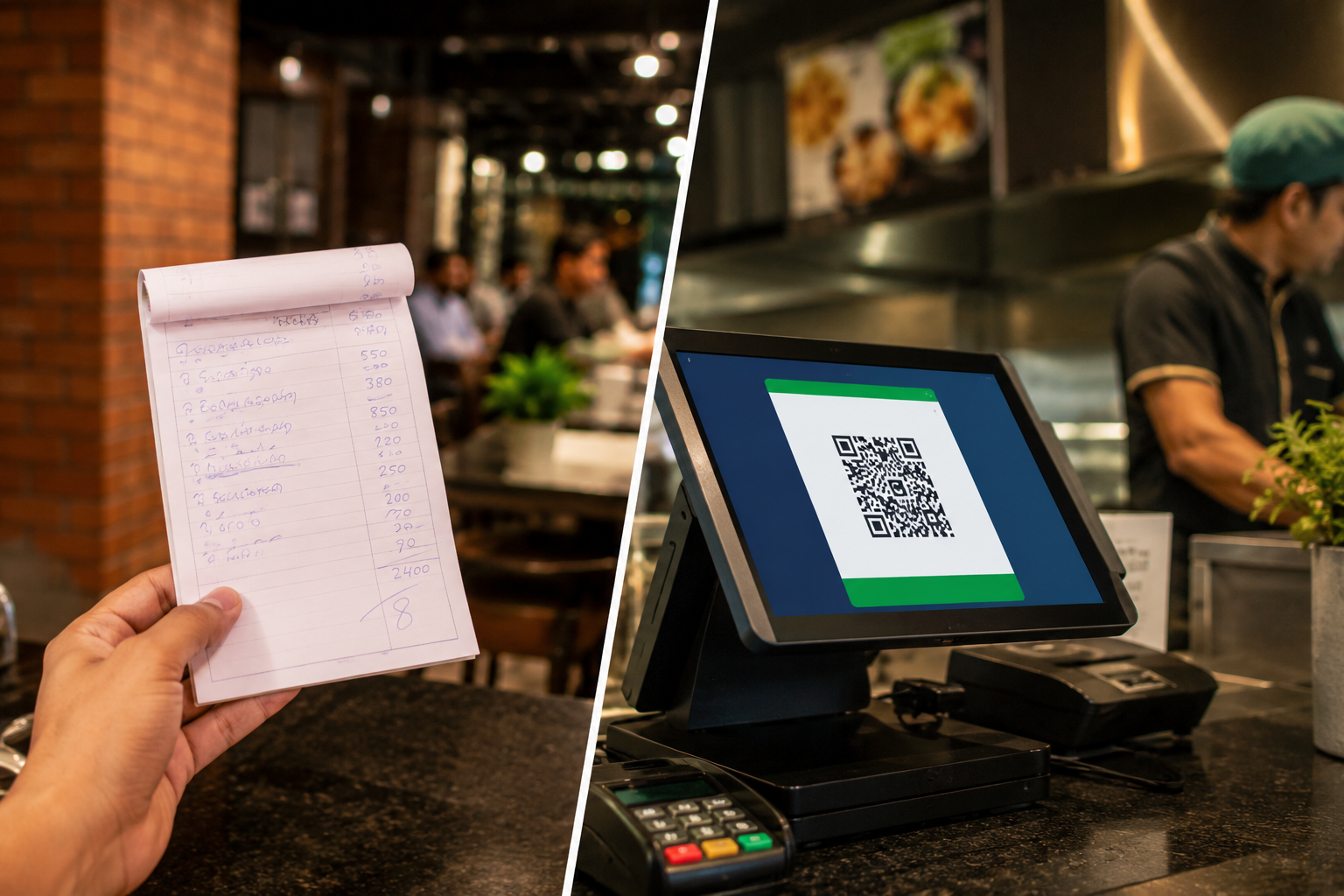
Many growing restaurant businesses rely on individual POS systems at each location. While this may seem manageable, it creates several operational challenges.
1. Limited Visibility
Owners often need to wait for reports from branch managers before understanding how each location is performing.
2. Inconsistent Reporting
Different reporting methods can make it difficult to compare sales, expenses, and profitability across branches.
3. Inventory Control Problems
Stock levels become harder to track when each location manages inventory independently. This often leads to overstocking, shortages, and unnecessary wastage.
4. Operational Inconsistencies
Menu updates, pricing changes, and promotional campaigns may not be implemented uniformly across all locations.
5. Poor Customer Data Management
Customer information and loyalty data often remain fragmented, preventing restaurants from delivering a consistent customer experience.
A centralized restaurant management software solution eliminates these issues by connecting all branches under one platform.
How a Restaurant Management System Helps Manage Multiple Branches
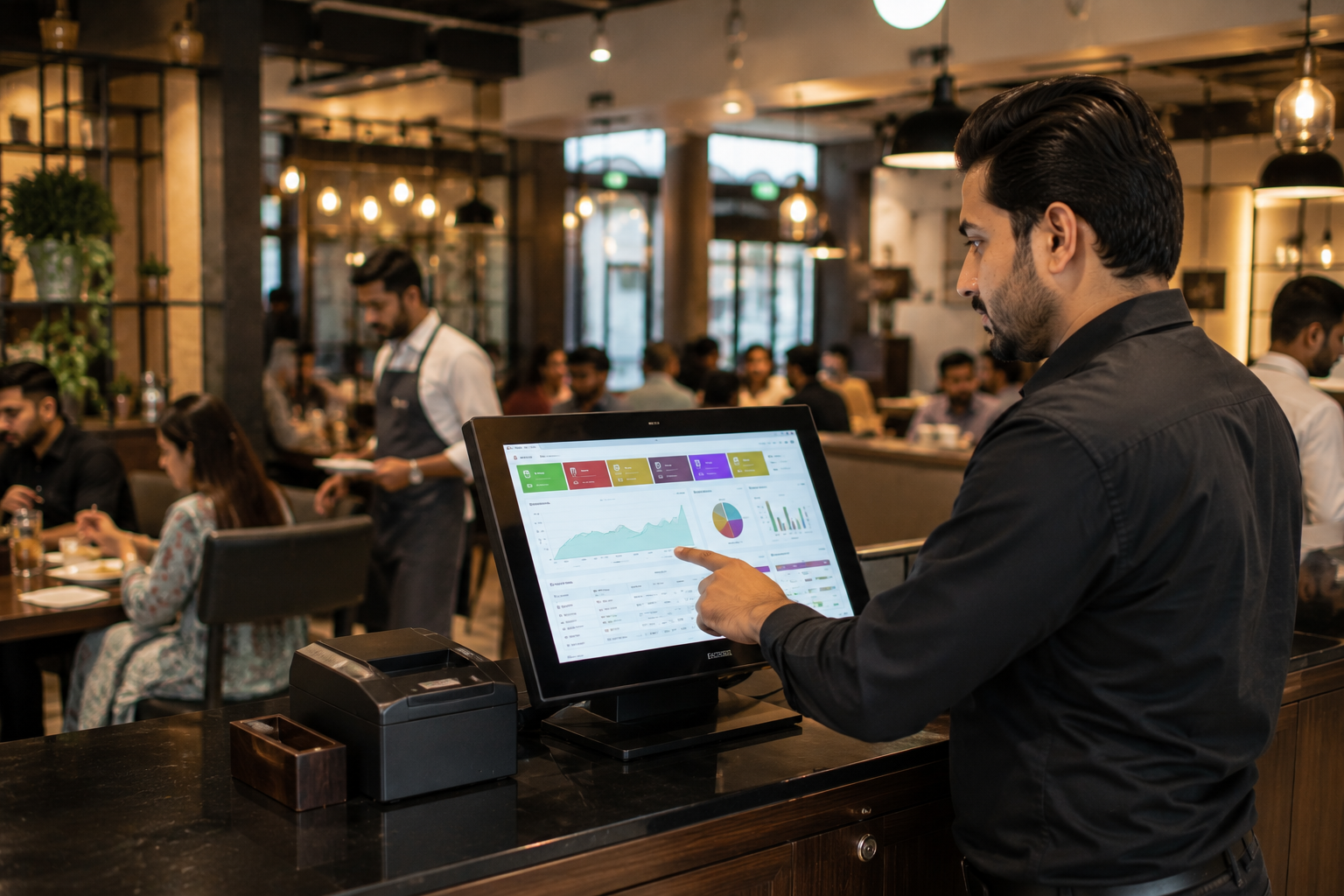
A modern restaurant management system allows operators to oversee every location from a centralized dashboard.
Instead of switching between systems or relying on manual updates, management teams can access real-time information from all branches in one place.
1. Centralized Sales Monitoring
A cloud-based POS allows restaurant owners to view sales activity across all locations in real time.
Management can:
- Compare branch performance
- Monitor daily sales
- Track revenue trends
- Identify top-performing locations
- Make faster business decisions
This level of visibility helps operators stay informed without physically visiting every branch.
2. Branch-Wise Reporting and Analytics
One of the biggest advantages of a centralized restaurant management software platform is access to detailed reporting.
Restaurant operators can analyze:
- Sales by branch
- Average order value
- Peak business hours
- Popular menu items
- Staff performance
- Profitability by location
These insights allow management teams to identify opportunities and address problems before they impact business performance.
3. Centralized Inventory Management
Inventory management becomes significantly easier when all branches are connected through a single system.
A restaurant management system can help businesses:
- Track inventory across locations
- Monitor stock consumption
- Manage stock transfers between branches
- Reduce food waste
- Improve food cost control
Instead of managing inventory separately at every outlet, operators gain a complete view of stock movement throughout the business.
4. Consistent Menu and Pricing Control
Maintaining consistency across multiple locations is essential for customer satisfaction.
With a centralized POS system, restaurants can:
- Update menus across all branches
- Standardize pricing
- Launch promotions centrally
- Introduce new items quickly
This ensures customers receive the same experience regardless of which branch they visit.
5. Employee Management Across Locations
Managing employees across multiple outlets can be challenging without proper tools.
A restaurant management software platform helps operators:
- Monitor attendance
- Track staff performance
- Manage user permissions
- Assign roles and responsibilities
- Improve accountability
Role-based access also ensures employees only have access to information relevant to their responsibilities.
6. Better Customer Experience
Customers expect consistency, whether they visit one location or another.
A centralized restaurant management system helps maintain customer satisfaction by providing:
- Consistent service standards
- Unified loyalty programs
- Centralized customer records
- Better customer insights
This allows restaurants to build stronger customer relationships and improve retention.

Key Metrics Every Multi-Branch Restaurant Should Track
Restaurant owners managing multiple locations should regularly monitor key performance indicators.
1. Sales by Branch
Comparing sales across locations helps identify strong and weak performers.
2. Average Order Value
Tracking average order value can reveal opportunities to improve upselling and menu strategies.
3. Food Cost Percentage
Monitoring food costs helps maintain profitability and reduce wastage.
4. Inventory Variance
Inventory discrepancies can indicate operational inefficiencies or stock management issues.
5. Labor Cost Percentage
Understanding labor costs across branches allows operators to optimize staffing levels.
6. Branch Profitability
Profitability reports provide a complete picture of how each location contributes to overall business growth.
Signs a Restaurant Has Outgrown a Basic POS System
Many restaurant operators continue using basic POS systems long after their business has expanded.
Common signs that it is time to upgrade include:
- Managing multiple restaurant branches
- Spending hours compiling reports manually
- Struggling to monitor inventory across locations
- Inconsistent operational processes
- Limited visibility into business performance
- Difficulty comparing branch results
If any of these challenges sound familiar, a centralized restaurant management software solution may be the next step.
What to Look for in a Multi-Branch Restaurant Management System
Not all restaurant software solutions are built for growing restaurant chains.
When evaluating a restaurant management system, operators should look for features such as:
- Cloud-based access
- Multi-branch management capabilities
- Real-time reporting
- Centralized inventory management
- Role-based permissions
- Menu management
- Customer loyalty tools
- Sales analytics
- Scalability for future growth
The right solution should simplify operations while supporting long-term expansion.
How Oscar POS Helps Manage Multiple Restaurant Branches
Oscar POS is designed to help restaurants manage operations efficiently across one or multiple locations.
With centralized reporting, real-time sales visibility, inventory tracking, staff management, and branch-wise analytics, Oscar POS gives restaurant owners greater control over their business from a single platform.
Whether managing a growing restaurant chain, multiple cafes, food courts, or quick service restaurants, Oscar POS helps streamline operations while providing the insights needed to make smarter business decisions.
Final Thoughts
Managing multiple restaurant branches does not have to mean juggling disconnected systems, spreadsheets, and manual reports.
A modern restaurant management system brings every location together under one centralized platform, allowing restaurant owners to monitor performance, control inventory, manage staff, and maintain consistency across all branches.
As restaurant businesses continue to grow, investing in the right restaurant management software can make the difference between reactive management and scalable growth.
Restaurants looking for a smarter way to manage multiple branches can explore how Oscar POS provides complete visibility and control from a single dashboard. Contact the Oscar team today to schedule a demo and see how a centralized POS system can simplify multi-branch restaurant management.
FAQs
1. What is a restaurant management system?
A restaurant management system is software that helps restaurants manage daily operations such as sales, inventory, staff, reporting, customer data, and business performance from a centralized platform.
2. Can one POS system manage multiple restaurant branches?
Yes. A cloud-based POS system can connect multiple restaurant locations and provide centralized access to sales data, inventory information, reports, and operational controls.
3. Why is centralized restaurant management important?
Centralized management allows restaurant owners to monitor all locations from one dashboard, improve decision-making, maintain consistency, and reduce operational inefficiencies.
4. How does a restaurant management system help with inventory control?
It enables businesses to track inventory levels, monitor stock movement, manage stock transfers, reduce wastage, and improve food cost management across all branches.
5. What reports should restaurant owners track across multiple branches?
Important reports include sales by branch, average order value, food cost percentage, labor cost percentage, inventory variance, and branch profitability.
6. Is a cloud-based POS better for multi-branch restaurants?
Yes. A cloud-based POS provides real-time access to business data from any location, making it easier to manage operations across multiple branches and support business growth.
7. Can a restaurant management system improve customer experience?
Yes. It helps maintain consistent service, supports centralized loyalty programs, stores customer data, and enables restaurants to deliver a better experience across all locations.
8. How does Oscar POS support multi-branch restaurant management?
Oscar POS offers centralized reporting, branch-wise analytics, inventory management, employee management, and real-time business visibility, helping restaurant owners manage multiple locations more efficiently.