How Pakistani Businesses Can Accept Online Payments and Scale Efficiently
May 21, 2026
.Blog
Digital payments are no longer limited to large ecommerce brands or enterprise retailers. Across Pakistan, businesses of all sizes are now adopting online payment methods to improve customer convenience, increase sales, and simplify operations. From retail stores and restaurants to online sellers and wholesalers, the shift toward cashless transactions is changing how businesses operate every day.
Customers now expect multiple payment options, including bank transfers, mobile wallets, QR code payments, and card payments. Businesses that still rely entirely on cash on delivery or manual billing often struggle with delayed payments, inventory mismatches, and operational inefficiencies.
This is where modern retail technology becomes essential. Businesses not only need ways to accept payments online, but they also need systems that connect payments with inventory management, billing automation, sales tracking, and ecommerce operations.
With the right POS software in Pakistan, businesses can manage both online and offline sales from one centralized platform while improving customer experience and preparing for long-term growth.
Why Online Payments Matter for Pakistani Businesses
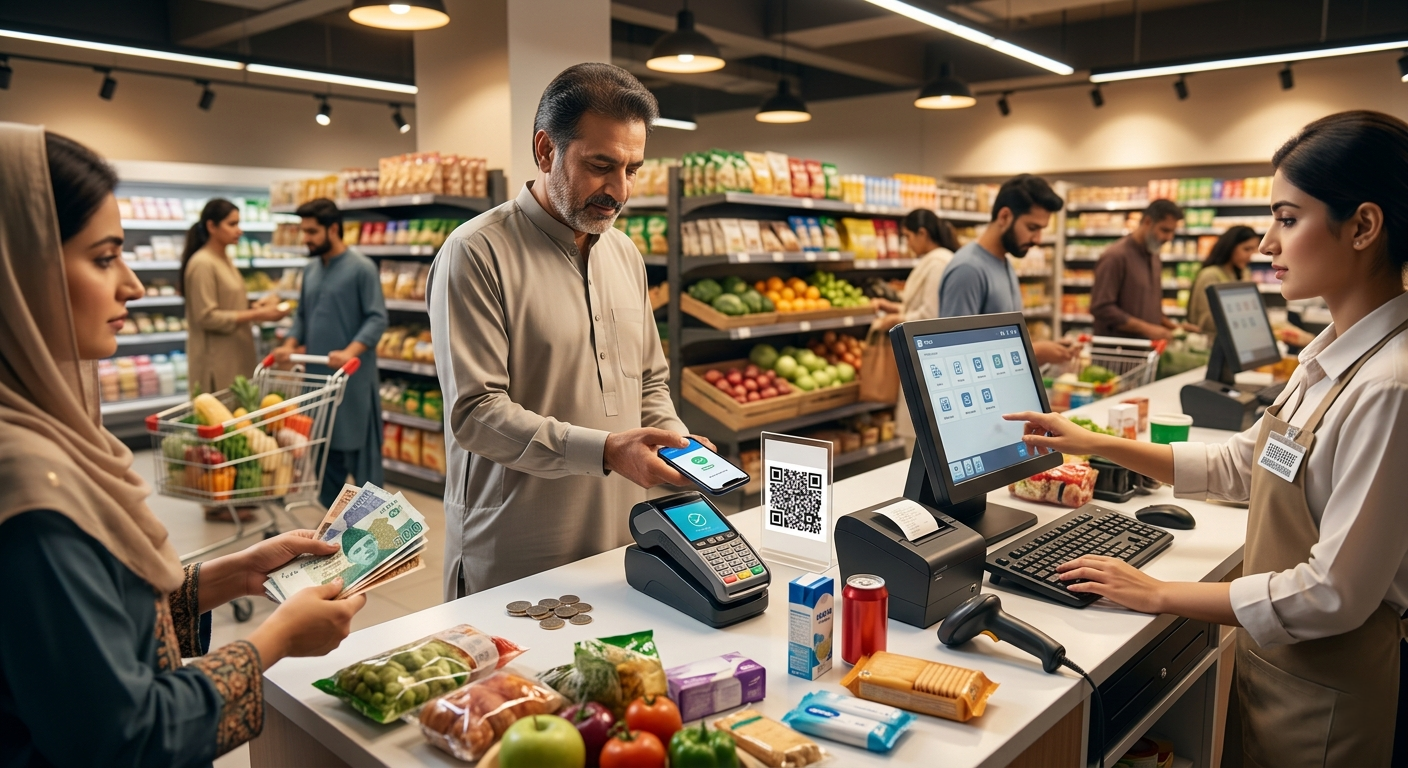
The adoption of digital payments in Pakistan has increased rapidly in recent years. Customers are becoming more comfortable using mobile wallets, QR payments, and online banking for everyday purchases.
For businesses, accepting online payments offers several advantages:
- Faster payment collection
- Improved customer convenience
- Reduced dependency on cash handling
- Better sales tracking
- Easier accounting and reconciliation
- Higher conversion rates for ecommerce stores
- Smoother checkout experiences
Businesses that offer multiple payment methods often build stronger trust with customers because they provide flexibility during checkout.
For ecommerce businesses, especially, online payments are becoming critical for reducing abandoned orders and improving operational efficiency.
Most Popular Online Payment Methods in Pakistan
Pakistani businesses can now choose from several digital payment methods depending on their industry and customer base.
1. Mobile Wallet Payments
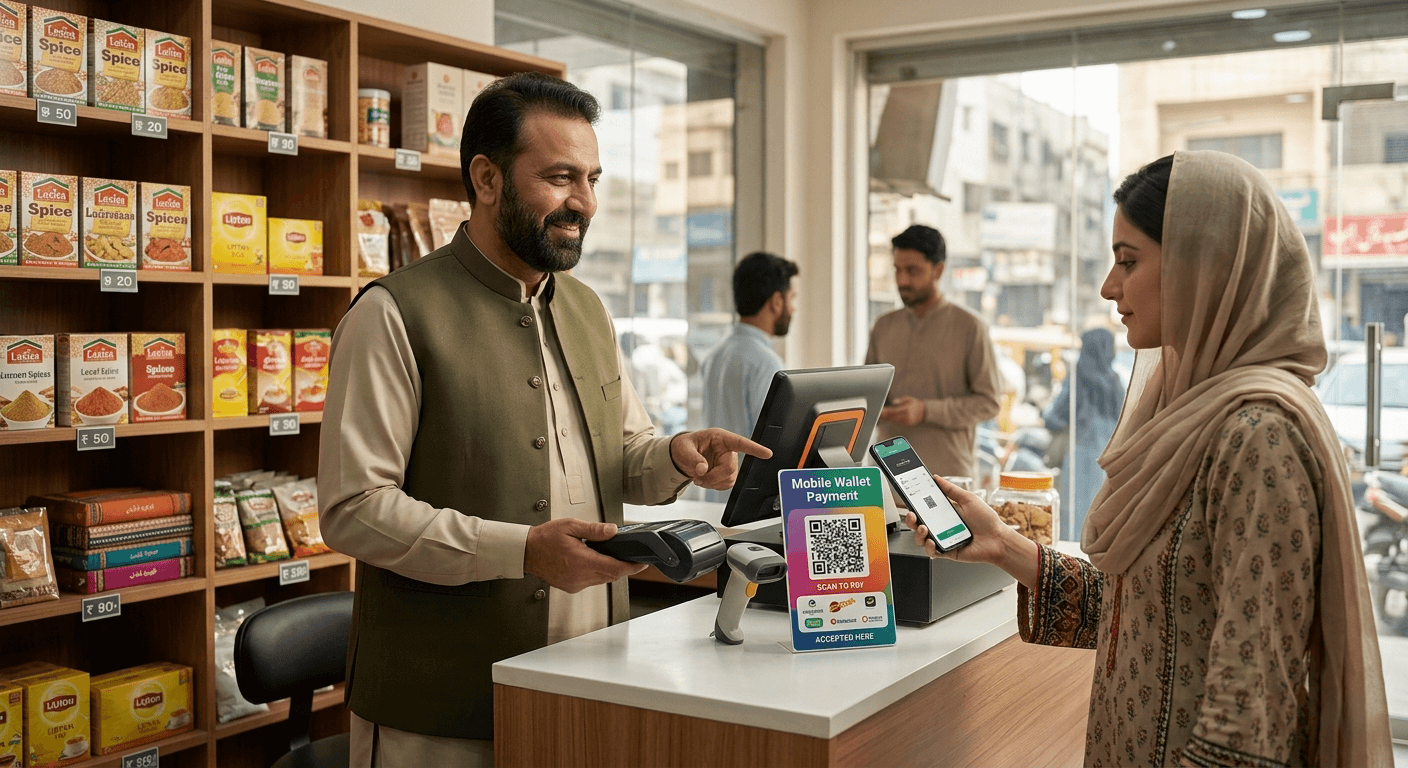
Mobile wallets like Easypaisa and JazzCash have become widely used across Pakistan. Customers use these platforms for online shopping, bill payments, and QR code transactions.
Businesses that support wallet payments often benefit from:
- Faster transactions
- Wider customer reach
- Easier payment collection
- Reduced cash dependency
2. Debit and Credit Card Payments
Many ecommerce businesses now accept Visa and Mastercard payments through local payment gateways. Card payments provide convenience for customers who prefer direct checkout options.
3. QR Code Payments
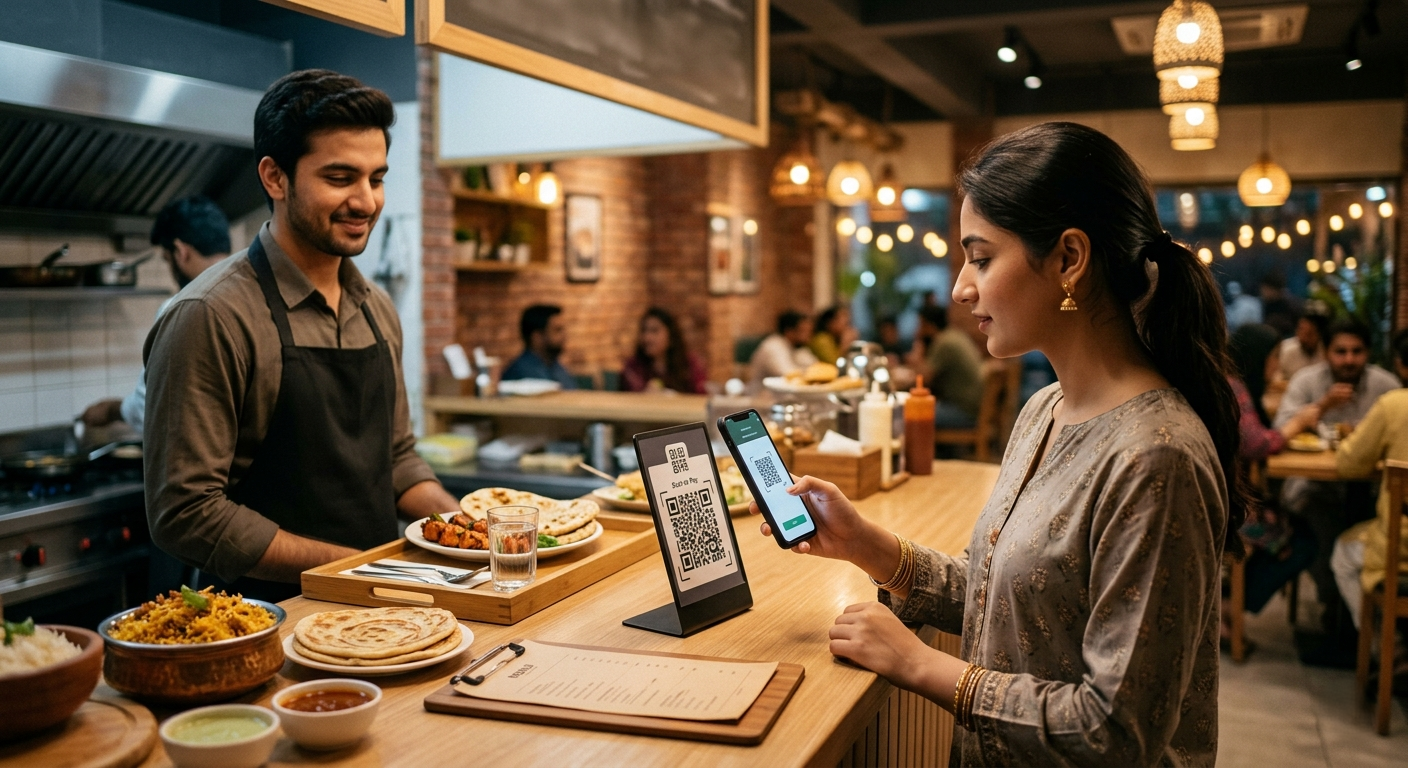
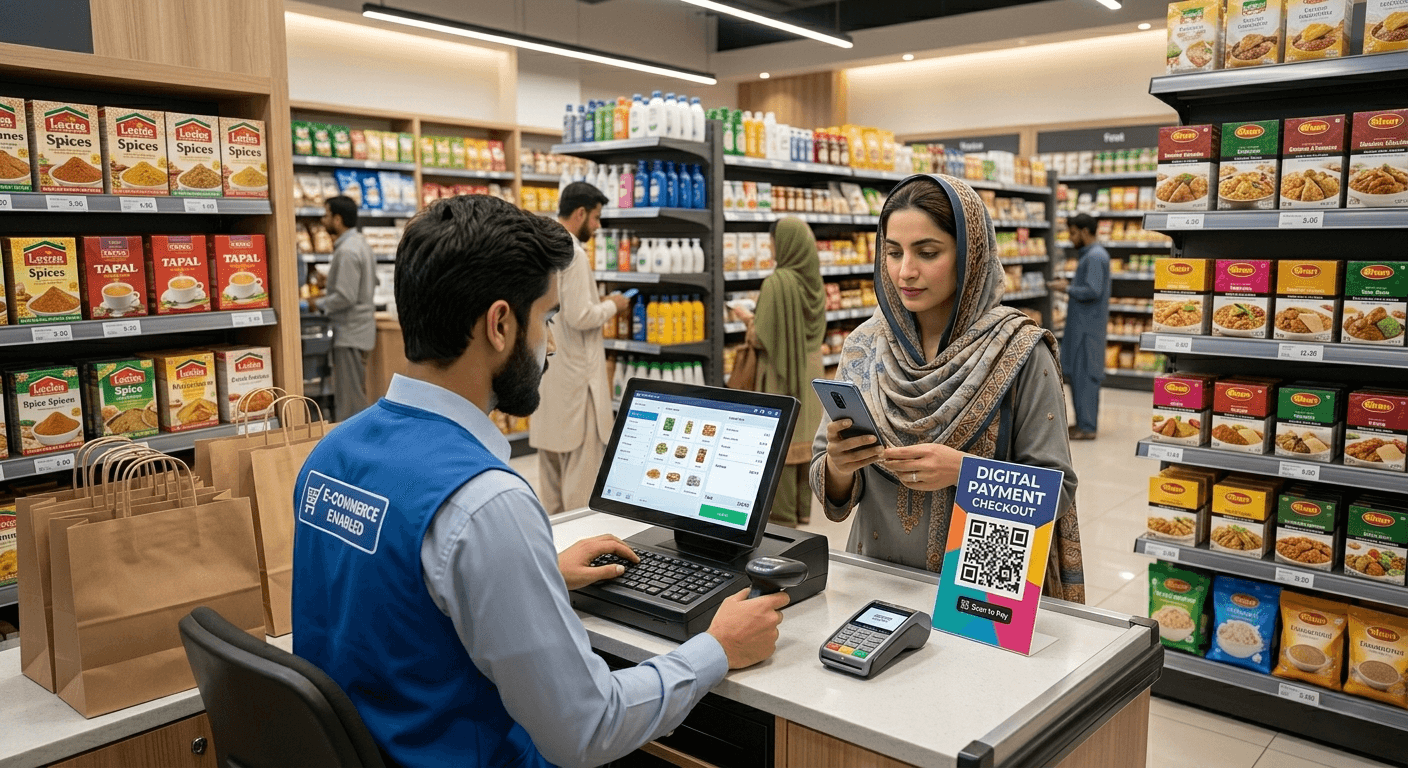
QR code payments are becoming increasingly common in retail stores, cafes, restaurants, and service businesses. Customers can scan and pay instantly using their mobile banking apps or wallets.
QR payments help businesses:
- Speed up checkout
- Reduce manual payment handling
- Improve customer experience
- Support contactless transactions
4. Bank Transfers
Bank transfers remain common for wholesalers, B2B businesses, and high-value transactions. Many businesses combine bank transfer payments with automated invoice generation for smoother reconciliation.
Challenges Businesses Face When Managing Online Payments
Accepting payments online is only one part of the process. Many businesses struggle after the payment is received because their operational systems are disconnected.
Common challenges include:
1. Manual Billing Processes
Businesses that manually create invoices or receipts often experience:
- Billing errors
- Slow checkout times
- Duplicate entries
- Accounting inconsistencies
2. Inventory Mismatches
Without inventory software connected to sales channels, businesses may accidentally oversell products or lose track of stock levels.
This becomes a major issue for ecommerce businesses handling both online and offline orders simultaneously.
3. Payment Reconciliation Problems
When payment systems are disconnected from billing and reporting tools, finance teams spend extra time matching transactions manually.
4. Difficulty Scaling Operations
As order volumes increase, businesses relying on spreadsheets or disconnected systems often struggle to maintain operational efficiency.
This is why many growing retailers now adopt ecommerce POS systems that centralize operations.
Why Businesses Need More Than Just a Payment Gateway
Many businesses assume that adding a payment gateway is enough to modernize operations. In reality, payments work best when connected to inventory management, billing automation, and sales tracking.
A modern ecommerce POS system helps businesses manage the entire sales workflow from one platform.
When a customer places an order online:
- Payment is processed
- Inventory updates automatically
- Invoice generation happens instantly
- Sales reports update in real time
- Order fulfillment becomes easier to manage
This connected workflow reduces manual work and improves operational visibility.
How Ecommerce POS Systems Help Businesses Grow
An ecommerce POS system connects online and offline business operations into one centralized solution.
Instead of managing separate tools for inventory, billing, ecommerce orders, and payment tracking, businesses can operate from a single dashboard.
Key benefits include:
1. Centralized Sales Management
Businesses can track:
- In-store sales
- Online orders
- Mobile payments
- QR transactions
- Customer purchase history
from one system.
2. Real-Time Inventory Tracking
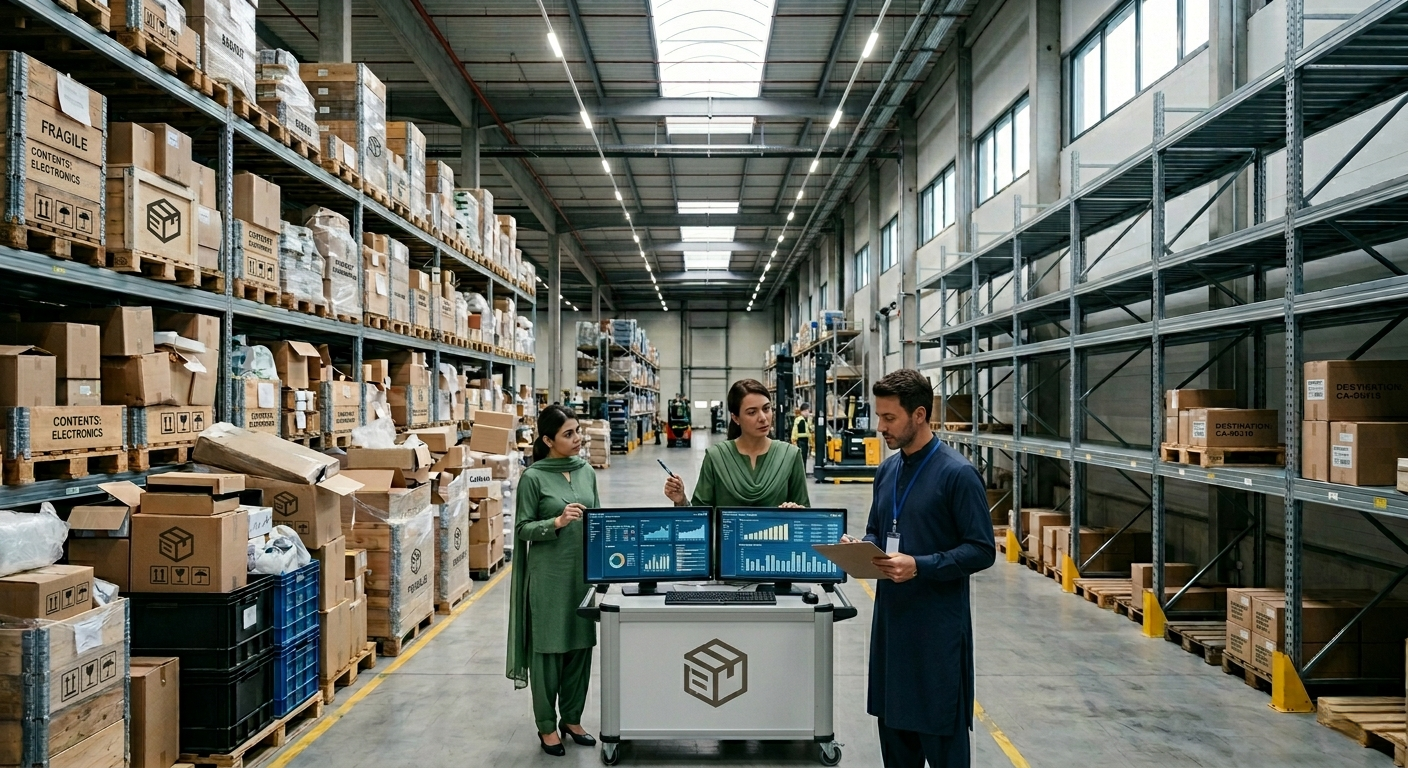
Inventory software helps businesses monitor stock levels across multiple locations and sales channels.
This reduces:
- Overselling
- Stock shortages
- Inventory discrepancies
- Delayed order fulfillment
3. Faster Billing Automation
Billing automation allows businesses to:
- Generate invoices instantly
- Reduce cashier workload
- Improve checkout speed
- Minimize manual errors
4. Better Reporting and Analytics
Modern POS software in Pakistan often includes detailed reporting features that help businesses monitor:
- Best-selling products
- Sales performance
- Payment trends
- Inventory movement
- Customer behavior
These insights help business owners make smarter decisions while scaling operations.
The Role of Inventory Software in Online Selling
Inventory management becomes more complex as businesses grow.
Without inventory software, businesses may struggle with:
- Inaccurate stock counts
- Delayed restocking
- Poor warehouse visibility
- Order fulfillment delays
Inventory software helps businesses maintain accurate stock records while syncing inventory across ecommerce platforms and physical stores.
For retailers managing high order volumes, this synchronization becomes essential for operational efficiency.
Why Billing Automation Is Important for Modern Retail Businesses
Manual billing processes slow down operations and increase the risk of human error.
Billing automation simplifies:
- Invoice generation
- Tax calculations
- Receipt creation
- Payment recording
- Customer billing history
For businesses handling large transaction volumes daily, automation improves speed and accuracy while reducing staff workload.
This becomes especially valuable for growing retail stores and ecommerce businesses scaling operations.
Common Mistakes Businesses Should Avoid
1. Relying Entirely on Cash on Delivery
While COD remains popular in Pakistan, businesses that only offer cash payments may lose customers who prefer digital checkout options.
2. Using Separate Systems for Sales and Inventory
Disconnected systems create operational inefficiencies and increase the risk of inventory errors.
3. Ignoring Mobile Wallet Adoption
Many Pakistani customers prefer mobile wallet payments. Businesses that fail to support them may limit sales opportunities.
4. Managing Orders Manually
Manual order processing becomes difficult as businesses grow. Automation improves both speed and accuracy.
5. Delaying Technology Adoption
Businesses that delay implementing modern retail systems often face operational bottlenecks when sales volumes increase.
What Businesses Should Look for in POS Software in Pakistan
Choosing the right POS software is important for long-term business growth.
Businesses should look for features such as:
1. Payment Integration Support
The system should support online payment methods, QR payments, and digital wallets.
2. Ecommerce Compatibility
An ecommerce POS system should connect online and offline sales operations.
3. Inventory Management Features
Real-time stock tracking and centralized inventory visibility are essential.
4. Billing Automation
Automated invoicing and checkout workflows improve efficiency.
5. Reporting and Analytics
Detailed sales and inventory reports help businesses make informed decisions.
6. Multi-Branch Management
Growing businesses benefit from centralized control across multiple locations.
How Oscar Helps Businesses Accept Online Payments and Manage Operations
Oscar helps Pakistani businesses modernize retail operations by combining payment management, inventory software, billing automation, and ecommerce POS system capabilities into one platform.
Businesses using Oscar can:
- Manage online and offline sales together
- Track inventory in real time
- Automate billing workflows
- Monitor sales performance
- Improve operational efficiency
- Scale operations more effectively
Instead of relying on disconnected tools, businesses can centralize operations while delivering a smoother customer experience.
For growing retailers and ecommerce brands, this kind of operational visibility becomes increasingly important as transaction volumes increase.
The Future of Digital Payments in Pakistan
Pakistan’s digital commerce ecosystem continues to grow rapidly. Businesses that adopt modern payment systems early are often better positioned to compete in an increasingly digital retail environment.
Customers now expect:
- Faster checkout experiences
- Flexible payment options
- Smooth ecommerce transactions
- Accurate order fulfillment
Businesses that combine online payment capabilities with strong inventory management and billing automation will likely operate more efficiently and scale more successfully over time.
Conclusion
Accepting online payments is no longer just about convenience. It has become an essential part of running an efficient and scalable business in Pakistan.
From mobile wallet payments and QR code transactions to automated billing and inventory synchronization, businesses now need connected systems that simplify operations while improving customer experience.
With the right POS software in Pakistan, businesses can streamline ecommerce operations, improve inventory accuracy, automate billing processes, and prepare for long-term growth.
For businesses looking to modernize operations without managing multiple disconnected tools, Oscar provides a centralized solution designed to support retail and ecommerce growth.
Businesses interested in exploring how modern POS technology can simplify payments, inventory, and billing operations can start by trying an Oscar POS demo before choosing a long-term solution.
FAQs
1. How can small businesses accept online payments in Pakistan?
Small businesses can accept online payments using mobile wallets, QR code payments, bank transfers, and payment gateway integrations connected to a POS system.
2. What is the best payment method for ecommerce businesses in Pakistan?
Most ecommerce businesses use a combination of mobile wallets, card payments, bank transfers, and cash on delivery to provide flexibility for customers.
3. Why is POS software important for online payments?
POS software helps businesses connect payments with billing, inventory management, and sales reporting for smoother operations.
4. What is an ecommerce POS system?
An ecommerce POS system connects online and offline sales channels into one centralized platform for managing inventory, orders, payments, and customer data.
5. How does inventory software help online businesses?
Inventory software tracks stock levels in real time, reduces inventory errors, and synchronizes products across multiple sales channels.
6. What is billing automation?
Billing automation uses software to generate invoices, process transactions, and manage sales records automatically instead of manually handling billing tasks.
7. Can POS software integrate with online payment systems?
Yes. Modern POS software in Pakistan often supports integrations with payment gateways, QR code payments, and mobile wallet solutions.
8. Why are QR code payments becoming popular in Pakistan?
QR code payments offer faster checkout experiences, contactless transactions, and easy mobile payment options for customers.
9. How can businesses scale operations more efficiently?
Businesses can scale operations by using centralized systems that combine payment processing, inventory software, billing automation, and ecommerce management tools.
10. Why should businesses use inventory software with online payments?
Connecting inventory software with payment systems helps businesses maintain accurate stock levels and avoid overselling products.